
How to Teach Kids Gratitude: 10 Simple Family Rituals
How to teach kids gratitude without lecturing: 10 easy family gratitude rituals, what research says about raising grateful kids, and ideas for every age.
Published on November 11, 2026 · 5 min read

You'd love your kids to be more grateful, without saying "Say thank you!" ten times a day? Research suggests gratitude is learned mostly through example and small, regular rituals: sharing three good things at dinner, noticing kind acts together, writing thank-yous. No lectures needed. A short, enjoyable ritual repeated often beats a big lesson. With Thanksgiving around the corner, here are 10 ideas you can try tonight.
What research says about kids and gratitude
The Greater Good Science Center at UC Berkeley reports on a study by Andrea Hussong and colleagues with more than 100 children aged 6 to 9 and their parents. For a week, parents logged each day what they did to encourage gratitude (pointing out a kind act, for example) and how much gratitude their child showed. The result: on days when parents did more, kids showed more gratitude that same day. The researchers are careful: the influence probably runs both ways.
The same team describes gratitude in four parts:
- Notice that you received something.
- Think about the fact that someone chose to give it.
- Feel a positive emotion, like joy.
- Do something to express it, like saying thanks.
Young children don't always connect all four at once, and that's normal. A toddler can be thrilled with a gift without understanding the effort behind it yet.
The American Psychological Association (APA) also points to a 2017 study in Applied Developmental Science finding that grateful parents tend to raise grateful kids. The good news: when you practice gratitude yourself, you're already teaching it.
10 family gratitude rituals
1. Three good things at dinner
Everyone names three small good things from their day. The Greater Good Science Center suggests exactly this kind of routine, at dinner or bedtime. Answers can be tiny: "Dessert," "I played with Maya," "It was sunny."
2. The bedtime question
In bed, before the story: "What made you smile today?" It's a calm moment when kids often open up.
3. The gratitude jar
A jar, small slips of paper, a pencil. Anyone can drop in a thank-you whenever they like. Once a month, or on New Year's Eve, read them together.
4. Notice kind acts
When someone helps your child, ask open-ended questions, as the APA suggests: "How did you feel when your friend shared his toy? Why do you think he did that?" It helps kids see the intention behind the gesture.
5. Model it out loud
Say your own thank-yous in front of them: "Thanks for setting the table, that really helps me." "That hug makes me feel so good." Thank your partner at breakfast too. Kids learn by watching.
6. A gratitude scavenger hunt
An idea from the APA article: a gratitude scavenger hunt. Find, at home or at the park, something that makes you happy, something beautiful, someone who helps you, something that keeps you warm.
7. Thank-you cards
After a party or a visit to Grandma's, make a card together. Little ones draw, older kids write a sentence. The point isn't forced manners; it's thinking about the person.
8. Thank someone who gets overlooked
The crossing guard, the librarian, the teacher, the delivery driver. Once a month, pick someone together to thank with a drawing or a few words.
9. Gratitude outdoors
On walks, notice what's beautiful: a red leaf, a squirrel, the crunch of snow. The APA notes that toddlers understand gratitude first through the senses: a lovely day, good food.
10. A family thank-you page
A page (or a notebook) where each person writes or draws one thank-you a week. Over time, it becomes a treasured family keepsake.
A story to start the conversation
Little ones often need pictures to grasp an idea as abstract as gratitude. A picture book at bedtime makes it concrete and joyful, without a lecture. This one is a family favorite:
Pitfalls to avoid
- Forcing thank-yous. The APA recommends showing rather than constantly reminding. A forced thank-you teaches manners, not gratitude.
- Overdoing it. Also per the APA, talking about gratitude too often can feel repetitive and lose its meaning. A study led by Sonja Lyubomirsky even found that expressing gratitude once a week led to more well-being than three times a week.
- Getting discouraged. Some rituals will click with your family, others won't. That's fine. Keep the ones that feel good.
- Reacting in anger when a child seems ungrateful. Ask what's going on for them instead: tired, disappointed, jealous?
And what about you?
The APA also cites a 2023 study led by John Coffey at Arizona State University, which found that parents who practiced gratitude improved their own well-being and their family's functioning. So your own little thank-you moment matters for the whole household.
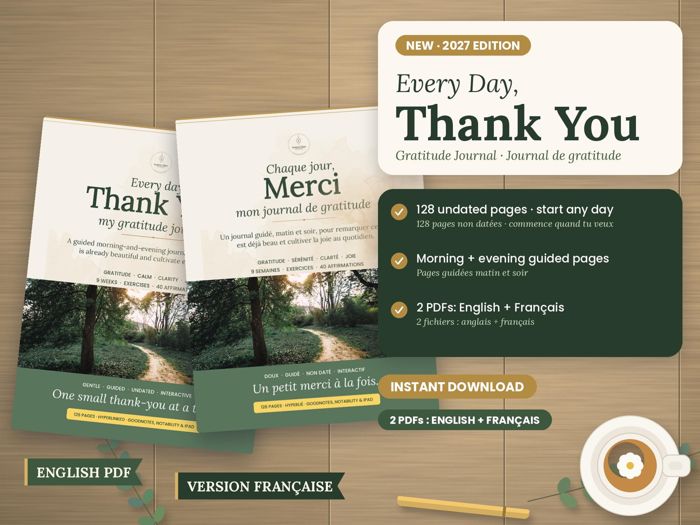
To help you keep the habit, our gratitude journal offers one simple page a day:
Frequently asked questions
At what age can a child understand gratitude?
Very early, in their own way. Toddlers experience it first through their senses and joy. Understanding that someone made an effort for them comes later, gradually, often around school age.
How do I raise grateful kids without lecturing?
Model it, ask open-ended questions about other people's kindness, and set up a small, enjoyable ritual like three good things at dinner.
Does a gratitude jar work with young kids?
Yes. Little ones can draw their thank-you or dictate it to an adult. Reading the slips together is often their favorite part.
How often should families practice gratitude?
There's no rule. A short ritual you enjoy, even once a week, is better than a daily routine that turns into a chore.
Sources
- Greater Good Science Center (UC Berkeley): How to Foster Little Moments of Gratitude with Your Kids
- American Psychological Association: Stop telling your kids to be grateful. Show them how instead
This article is written with the help of artificial intelligence and reviewed by the Lantern Days team. It does not replace advice from a professional. See our Artificial intelligence page.

Subscribe and get 2 gifts


