
How to Get Over a Breakup: A Gentle Week-by-Week Plan
How do you get over a breakup? A gentle 8-week plan: let yourself grieve, go no contact, rebuild your routine and rediscover who you are on your own.
Published on November 11, 2026 · 3 min read

A breakup is a real loss. Getting over it starts with giving yourself permission to hurt, then slowly rebuilding your routine, your support system and your sense of who you are on your own. There's no magic fix and no deadline, but a gentle plan, taken one week at a time, can keep you from feeling completely lost. Here's the one we suggest, based on guidance from psychologists and Cleveland Clinic.
Why breakups hurt so much
When a relationship ends, you don't just lose a person. You also lose:
- routines: good-morning texts, dinners together, weekend plans;
- a future you pictured: a trip, a home, maybe a family;
- part of your identity: the "us" that had become part of you;
- sometimes other people: their family, shared friends.
Cleveland Clinic describes a breakup as a loss that often comes without closure: the person is still out there, and you may never get the answers you wanted. That's why heartbreak can feel a lot like grief, with waves of sadness, anger, longing and sometimes relief. All of it is normal.
Week 1: get through the shock
In the first days, your only job is to get through the day. No big decisions, no "I should be over this by now."
- Cry if you need to. Holding it in doesn't make it go away.
- Tell one or two people you trust what's happening. You don't owe anyone the full story.
- Cover the basics: eat something, drink water, sleep what you can, take a shower.
- Try not to numb the pain with alcohol or other substances; Cleveland Clinic notes this can make things worse.
Week 2: create some distance
This is often the week when the urge to text your ex, check their social media or reread old messages is strongest. Every contact reopens the wound a little.
A few practical steps:
- mute or unfollow them, at least for now;
- archive your chats and photos (you don't have to delete them yet);
- choose a friend to be your "call me instead" person when you want to reach out;
- if you share kids or logistics, keep messages short, practical and in writing.
Going no contact isn't a punishment. It's the space your heart needs to heal.
Week 3: put words to what you feel
Thoughts on a loop? Write them down. Getting feelings onto paper helps you see them more clearly and stop carrying everything in your head.
Some prompts to start with:
- What do I really miss: the person, or what they represented?
- What did I never get to say?
- What wasn't working between us?
- What do I need today?
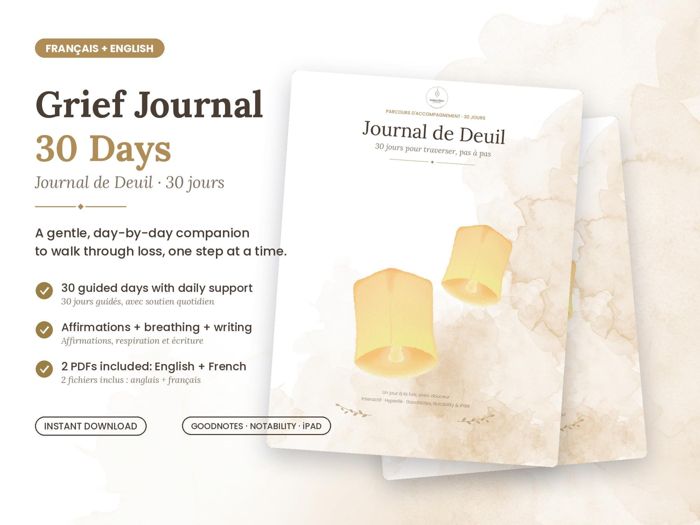
If you don't know where to begin, a guided journal can hand you one gentle question each day. Our grief journal was designed for every kind of loss, including the end of a relationship.
Week 4: remember the whole story
Over time, nostalgia tends to polish your memories. You remember the good moments and forget the arguments, the loneliness or the needs that weren't being met.
Cleveland Clinic suggests that you remind yourself why you broke up. Make an honest list, without cruelty: what hurt, what was missing, what you don't want to live through again. Keep it handy for the nights when doubt creeps in. The point isn't to hate them; it's to see the whole picture.
Week 5: rebuild your routine
A breakup leaves holes in your day, and those empty moments are often the hardest: dinnertime, Sunday mornings, the drive home from work.
Fill them gently:
- a walk at the same time every day;
- a standing Sunday call with a friend;
- a new morning ritual that's just for you;
- a simple meal you enjoy making.
A steady rhythm of sleep, meals and movement gives your body and mind solid ground while your emotions are still shifting.
Week 6: reconnect with yourself
Who are you outside of that relationship? It may be the most important question, and one of the most hopeful.
- Pick back up a hobby you'd let slide.
- Try something new: a class, a sport, a workshop.
- Revisit your values and goals: what matters to you now?
- Reach out to friends you'd drifted away from.
These small steps aren't about "replacing" your ex. They remind you that your life belongs to you.
Week 7: expect setbacks
One morning you'll feel lighter. The next, a song or a photo will bring you to tears. Setbacks don't mean you're going backward. Healing looks more like waves than a straight line.
When a wave hits, talk to yourself the way you would a friend: "Of course I'm still sad. I'm doing my best." Self-compassion, which Cleveland Clinic also recommends, helps far more than self-criticism.
Week 8: look ahead
You don't need to be "healed" to start making plans. Choose one or two small goals for the coming months, something you want just for you. And there's no rush to date again: taking time to heal first helps you avoid carrying the same pain into your next relationship.
To keep you company through that first hard month, our 30-day journal offers one short, gentle page a day.
When to reach out for help
If sadness keeps you from functioning for weeks, if you're isolating, if you can't sleep, or if the relationship was controlling or abusive, talk to a professional: your doctor, a therapist or a support group. And if you have thoughts of harming yourself, reach out for help right away.
Frequently asked questions
How long does it take to get over a breakup?
There's no set timeline. It depends on how long you were together, how it ended, the support you have and what else is going on in your life. The sharpest pain usually softens over weeks, but waves can come back later. That's normal.
Should I stay friends with my ex?
Maybe someday, but rarely right away. Most psychologists agree that a period of no contact helps you heal. A genuine friendship, if it's possible at all, tends to come later, once you're no longer hoping to get back together.
Why can't I stop thinking about my ex?
Your brain got used to this person: their presence, their texts, your shared habits. The thoughts often come back when you're tired or alone. Writing, moving your body and filling empty moments help space them out over time.
What if I was the one who ended it?
You're still allowed to grieve. Leaving someone can bring guilt, doubt and sadness, even when it was the right decision.
Sources
- Cleveland Clinic: Trying To Get Over a Breakup? Start Here
- American Psychological Association: Building your resilience
This article is written with the help of artificial intelligence and reviewed by the Lantern Days team. It does not replace advice from a professional. See our Artificial intelligence page.
To go further




Subscribe and get 2 gifts


