
Feeling Lonely During the Holidays: 10 Gentle Ways to Get Through the Season
Alone at Christmas, or surrounded by people and still lonely? Why loneliness hits harder at the holidays, and 10 practical ways to feel less alone.
Published on November 11, 2026 · 6 min read

Feeling lonely during the holidays is far more common than most people think. To get through the season, remember that many others feel this way too, plan your days ahead, take one small step toward other people, care for your body, and let go of the picture-perfect holiday. Loneliness isn't a personal failure. It's a signal that you need connection, and that need deserves your kindness.
Whether you're spending Christmas alone for the first time or feeling lonely in a full room, here are simple ideas to help you feel a little more held this season.
Why loneliness feels heavier at the holidays
For much of the year, loneliness can stay in the background. In December, it steps forward. Ads, movies and social media are full of crowded tables, happy families and couples exchanging gifts. Mental Health First Aid notes that pop culture and social media often show an idealized version of the season, which can make you feel even more on the outside.
Holiday loneliness can look like:
- living alone, without close or available family;
- a breakup or divorce, with a first holiday that looks different or kids at the other parent's home;
- grief, when the person you miss was at the center of your traditions;
- a move far from the people you love;
- work that keeps you from gatherings;
- feeling alone in a crowd, when no one around you seems to really get you.
It helps to separate being alone from feeling lonely. Some people spend the holidays alone by choice and feel content. Others are surrounded by people and still feel deeply isolated. What matters is how you feel, not how many people are at the table.
What public health says about connection
The U.S. Surgeon General has made social connection a public health priority. The office explains that loneliness and isolation are linked with health risks, and that all of us have a role to play in building connection. The message is simple: needing other people is not a weakness. It's deeply human.
1. Remember you're not the only one
This is the first tip from Mental Health First Aid: know that many people feel isolated during the holidays. That thought won't erase the ache, but it can take away some of the shame. You haven't done anything wrong. You're feeling something millions of people are feeling right now, too.
2. Plan your days ahead of time
Christmas Day or New Year's Eve is often harder when it arrives with no plan. A few days before, write down what you'd like to do:
- morning: a breakfast you love, a walk outside, some music;
- afternoon: a video call, a comforting movie, a craft, a book;
- evening: a good meal, a bath, a few lines in your journal.
Having a thread through the day keeps empty hours from swallowing you up.
3. Take one small step toward others
Mental Health First Aid suggests reconnecting with people: chatting with a neighbor or coworker, sending holiday cards, calling an old friend, going to a holiday event. The step can be tiny:
- text someone you've been thinking about;
- mail a handwritten card;
- say yes to an invitation, even for an hour;
- suggest a January coffee with someone you'd like to know better.
Often, the other person was waiting for a sign too.
4. Say yes to imperfect invitations
A coworker's open house, a community dinner, a neighborhood event: it may not be the holiday you imagined, but these moments can bring real warmth. You can arrive late, leave early and drive yourself. Giving yourself an exit often makes it easier to go.
5. Volunteer
Helping others is one of the ideas Mental Health First Aid offers: serving a meal at a community kitchen, giving time at an animal shelter, wrapping gifts for a toy drive. Volunteering connects you with people around a shared purpose, without the pressure of small talk. In both the United States and Canada, 211 can help you find local organizations and holiday activities near you.
6. Create your own traditions
If the old traditions aren't possible anymore, you can make new ones, just for you:
- a Christmas movie and hot chocolate on Christmas Eve;
- a walk through a neighborhood full of lights;
- cooking a recipe from your childhood;
- wrapping a small gift for yourself to open in the morning;
- writing a letter to the person you'll be a year from now.
A tradition is simply something you return to that makes you feel good.
7. Take care of your body
Fatigue makes loneliness heavier. Mental Health First Aid recommends keeping healthy habits: enough sleep, regular movement, nourishing meals and time for hobbies you enjoy. Even a short walk in daylight can shift the color of a day.
8. Be careful with social media
Other people's perfect photos show one second of their day. If scrolling leaves you sadder, give yourself permission to step back for the holidays. Our guide to a digital detox has gentle ways to do it.
9. Notice what is here
Mental Health First Aid also talks about focusing on what you have instead of comparing yourself to others. This isn't about forcing yourself to feel grateful or pretending you're fine. It's about noticing, each evening, one or two small things that felt soft: a message you received, snow falling, a song, your cat on your lap. These little points of light don't replace the connection you're missing, but they help you get through the days.
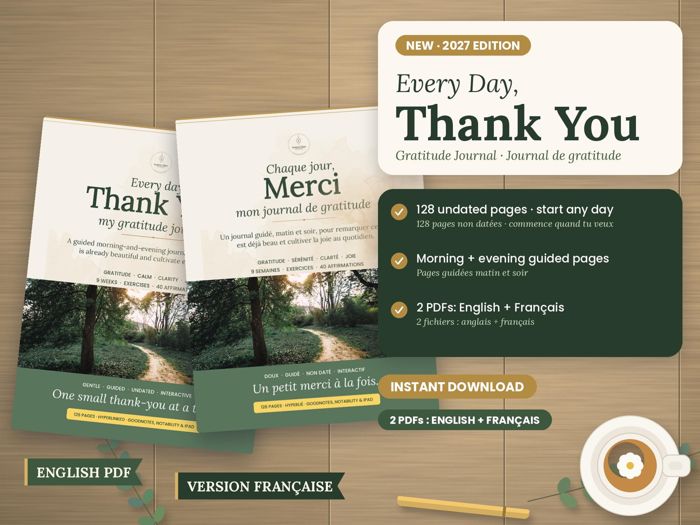
If you'd like a place to write them down, our Every Day, Thank You journal gives you one simple page a day, with gentle prompts for the evenings when words don't come easily.
10. Tell someone
Saying "I've been feeling lonely lately" takes courage, but it's often the beginning of a real connection. If loneliness lasts, comes with deep sadness, or makes it hard to function, talk to your doctor or a mental health professional. And if you have thoughts of harming yourself, please don't stay alone with them: there are people ready to listen day and night, even on December 25.
When loneliness comes from grief
When holiday loneliness comes from missing someone who has died, it becomes part of grief. Be especially gentle with yourself. Our article on the first Christmas after a death has ideas for honoring your person and getting through the day.
Frequently asked questions
Is it normal to feel lonely at Christmas?
Yes. Many people feel lonely during the holidays, whether or not they live alone. Images of happy gatherings everywhere make the feeling stronger at this time of year.
What can I do if I'm spending Christmas alone?
Plan the day ahead with moments you enjoy, schedule a call or visit, get outside, and consider volunteering or community events. Calling or visiting 211 can help you find what's happening near you.
How can I help someone who is alone for the holidays?
Invite them, even just for dessert, call them on Christmas Day or send a card. A simple "I'm thinking of you" can mean a great deal to someone who feels isolated.
When is loneliness a reason to get help?
If it lasts a long time, comes with deep sadness, trouble sleeping or functioning, or thoughts of harming yourself, reach out for help. You can call or text 988 at any time.
Sources
- Mental Health First Aid: Loneliness, how to cope during the holiday season
- U.S. Department of Health and Human Services: Social Connection, Office of the Surgeon General
- Mayo Clinic Health System: Tips to fend off holiday stress
This article is written with the help of artificial intelligence and reviewed by the Lantern Days team. It does not replace advice from a professional. See our Artificial intelligence page.

Subscribe and get 2 gifts


