
Coping With Job Loss: How to Rebuild Your Confidence and Bounce Back
Just lost your job? The first practical steps, how to handle the shock, keep a routine, rebuild your confidence and plan your next move, one step at a time.
Published on November 11, 2026 · 4 min read

Losing your job is a shock. To bounce back, start with the essentials (what you're owed, your budget, your unemployment claim), then give yourself permission to grieve before slowly rebuilding your routine and your confidence, one small step at a time. A layoff or firing says nothing about your worth. It's a hard transition, and there are gentle, practical ways to move through it.
Why losing a job hurts so much
Work gives us more than a paycheck. HelpGuide, a nonprofit mental health resource, points out that job loss can also take away:
- your routine: when you wake up, your commute, your breaks;
- your sense of control: suddenly, big decisions are out of your hands;
- part of your identity: your title, your role, your place on a team;
- your connections: the coworkers you saw every day.
That's why job loss often feels like grief: disbelief, anger, shame, fear, sadness. These feelings are normal. HelpGuide encourages you to acknowledge the loss instead of pretending everything's fine.
Your first steps (the first week)
Before thinking about what's next, a few practical moves can lift some of the pressure.
Check what you're owed
Your employer may owe you severance, unused vacation pay or pay in lieu of notice. Review your offer letter, contract or employee handbook. The rules depend on where you live: your state labor department in the U.S., or your provincial employment standards office in Canada.
File for unemployment benefits quickly
In the United States, each state runs its own unemployment insurance program, and it's generally best to file as soon as possible after your last day. In Canada, the federal government advises applying for Employment Insurance as soon as you stop working, since payments can take a while to start.
Rework your budget
Track your spending, separate essentials from extras, and see what you can trim for now. If you have an emergency fund, this is what it's for, and it can help you avoid new debt.
Look into health coverage and insurance
In the U.S., losing a job can mean losing health insurance, so check your options right away (such as COBRA or the Health Insurance Marketplace). Some credit card, loan or mortgage policies also include job-loss protection; read yours carefully and keep making at least minimum payments while you wait.
Let yourself feel it, without judgment
Once the essentials are handled, give yourself some time. You don't have to send out 50 résumés by Monday.
- Talk about it with people you trust. HelpGuide notes that isolation tends to make stress worse.
- Be honest with your family, and give kids simple, age-appropriate explanations: "Mom doesn't work at that place anymore. We'll figure it out, and everyone's going to be okay."
- Write down what you feel. Getting anger, fear or shame onto paper helps get it out of your head, especially at night.
- Avoid escape routes that cost you later, like drinking to "switch off."
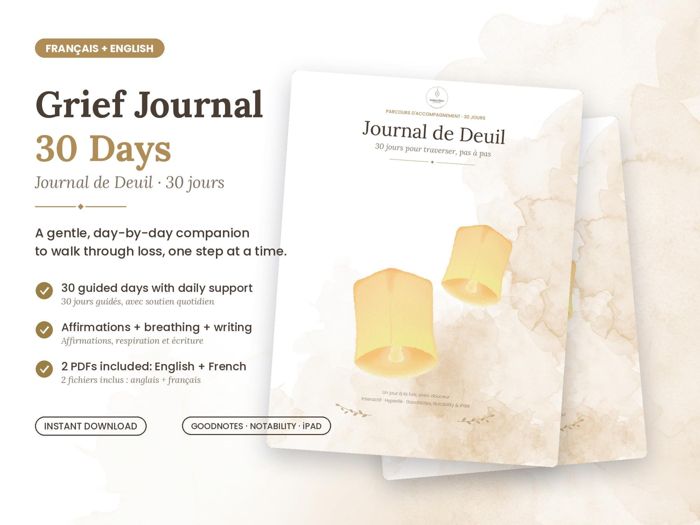
For the first few weeks, a guided journal with one short page a day can help you set your feelings down without getting lost in them.
Keep a routine (even without a boss)
Without a schedule, days can stretch out and blur together. HelpGuide and the American Psychological Association (APA) both recommend simple structure.
A sample day might look like this:
- morning: wake up at the same time, eat breakfast, take a 20-minute walk;
- a work block of two or three hours for your job search;
- afternoon: something that's good for you (exercise, reading, a creative project, volunteering);
- evening: a few minutes to write down what you got done, even the small things.
Moving your body regularly, even a little, helps manage stress. So does a consistent sleep schedule.
Rebuild your confidence
After losing a job, your inner voice can turn harsh: "I'm worthless," "Nobody will hire me." Here are a few ways to put it back in its place.
List your strengths
Write down at least ten things you're good at, projects you're proud of and compliments you've received. Reread the list before every interview.
Remember what helped you before
The APA suggests you learn from your past: how did you get through other hard times? What strengths did you rely on? They're still there.
Define yourself beyond your job
You're also a friend, a mother, a sister, a creative, a volunteer, an athlete. HelpGuide recommends nurturing those parts of your life during your search: they bring meaning and energy.
Keep things in perspective
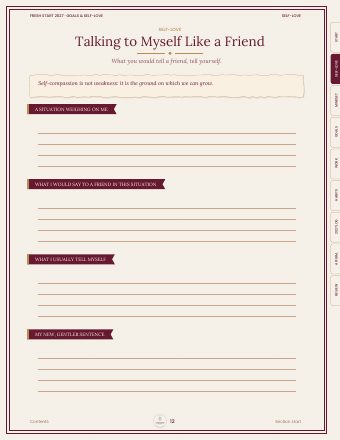
Catastrophic thoughts ("I'll never find anything again") are common. Ask yourself: "What's actually proven? What would I tell a friend in my shoes?"
Plan your next move, one small step at a time
The APA recommends breaking big problems into smaller steps and moving toward your goals regularly. A job search breaks down nicely:
- Get clear on what you want (the same field? a career change? different hours?).
- Update your résumé and LinkedIn profile.
- List 20 people in your network to reach out to.
- Set a small weekly goal, such as three targeted applications and two networking coffees.
- Review your progress every Friday.
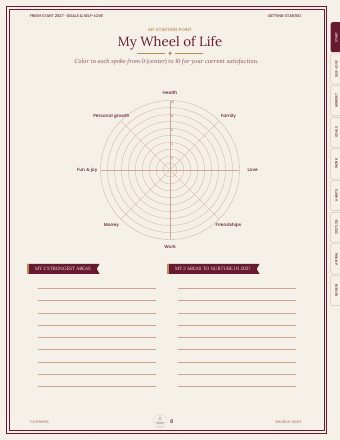
It's also a good moment to ask what you really want for the year ahead. Our Fresh Start journal helps you set realistic goals, build a month-by-month plan and take care of yourself along the way.
When to reach out for help
If anxiety or sadness keeps you from sleeping, eating or functioning for several weeks, talk to your doctor or a therapist. Many employers offer an Employee Assistance Program (EAP) that may stay available for a while after you leave, so it's worth asking. And if you have thoughts of harming yourself, reach out for help right away.
Frequently asked questions
What should I do first after losing my job?
Find out what your employer owes you, file for unemployment benefits quickly, sort out health coverage if you're in the U.S., and review your budget. Only then, take a breath before planning your search.
How do I explain being laid off in an interview?
Keep it short, honest and forward-looking: explain in a sentence or two what happened (a restructuring, the end of a project), what you learned, then talk about what you're looking for now. Avoid criticizing your former employer.
Is it normal to feel ashamed after being let go?
Yes, it's a very common feeling. Yet layoffs affect skilled people in every field. Talking with loved ones, or with others who've been through it, often helps lighten that weight.
How long does it take to find a new job?
It varies a lot depending on your field, your location and the job market. Instead of setting a deadline, focus on what you control: the actions you take each week.
Sources
- HelpGuide: Job Loss and Unemployment Stress
- American Psychological Association: Building your resilience
- Government of Canada, Financial Consumer Agency: Losing your job (French version)
This article is written with the help of artificial intelligence and reviewed by the Lantern Days team. It does not replace advice from a professional. See our Artificial intelligence page.
To go further


Subscribe and get 2 gifts


