
How to Get Through a Hard Time: 12 Things That Actually Help
Going through a hard time? 12 simple, practical things that help, backed by trusted health organizations, to keep going one day at a time, without judgment.
Published on November 11, 2026 · 5 min read

When everything feels heavy, it's natural to look for one big fix. But getting through a hard time usually comes down to small things done again and again: staying connected, caring for your body, breaking problems into smaller steps and talking to yourself kindly. The American Psychological Association (APA) describes resilience not as a trait you either have or don't, but as a set of skills anyone can learn. Here are 12 practical ones to try, one at a time.
First: you don't have to be okay
A breakup, a loss, an illness, a layoff, money worries, a child who's struggling: hard seasons come in a thousand shapes. Before anything else, know this: feeling sad, tired or scared isn't failing. It's a human response to something heavy. The ideas below aren't homework to ace. Pick one or two that speak to you today.
Tend to your connections
1. Tell someone what's going on
The APA puts relationships at the heart of resilience. You don't have to share everything. A simple text can be enough: "I'm going through a rough patch. Could I call you tonight?" Most people are touched to be asked.
2. Join a group, even a small one
A support group, a faith community, a class, a walking club: both the APA and the Centers for Disease Control and Prevention (CDC) encourage staying connected to a community. Feeling understood by people going through something similar often lightens the load.
Tend to your body
3. Protect your sleep
The CDC notes that a consistent sleep and wake schedule helps manage stress, and that most adults need seven or more hours a night. If racing thoughts keep you awake, our article on how to stop overthinking at night has practical ideas.
4. Move a little every day
You don't need an intense workout. A 20- to 30-minute walk, a few stretches, dancing in the kitchen: the CDC suggests working up to about two and a half hours of activity a week, spread out in short bursts. Start with five minutes if that's all you've got.
5. Eat simply and regularly
When life is hard, it's easy to skip meals or graze on whatever's around. Keep easy options on hand: soup, eggs, fruit, yogurt, a go-to recipe you like. Your body needs fuel to get through the storm.
6. Watch out for escape hatches
The APA warns against "negative outlets": alcohol, drugs or other habits that numb the pain in the moment but make things worse later. If you notice you're relying on them, that's a good signal to reach out for support.
Tend to your mind
7. Limit news and social media
The CDC recommends taking breaks from the news and social media, since a constant stream of bad news can be upsetting. Try choosing one or two set times a day to check in, and leave your phone in another room at night.
8. Write down what you're carrying
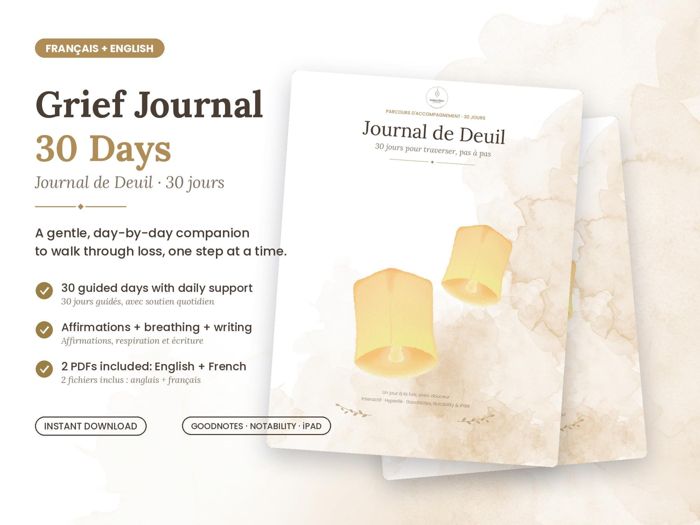
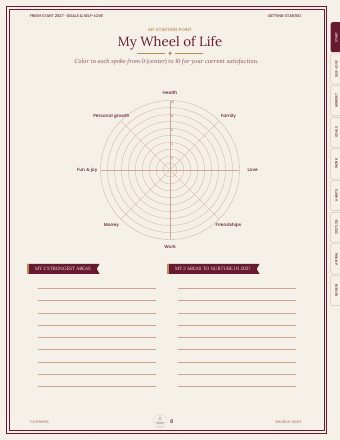
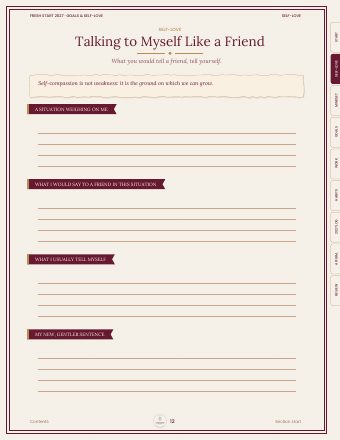
Putting your thoughts on paper helps you see them more clearly. You can free-write, or answer one simple question: "What's weighing on me most today? What do I need?" When you don't know where to begin, a guided journal offers one short, gentle page for each day.
9. Notice what's still good, even a little
The CDC suggests writing down specific things you're grateful for each day, and the APA mentions mindfulness practices focused on gratitude. This isn't about denying what's hard. It's about keeping a small window open to what's still beautiful: a hot coffee, a kind text, a patch of sunlight.
10. Keep things in perspective
In hard moments, the mind tends to jump to the worst. The APA recommends questioning catastrophic thoughts: "Is that really certain? What would I tell a friend who thought this?" Remember, too, what got you through past challenges: you've survived hard things before.
Move forward, one tiny step at a time
11. Break the problem into small steps
Big problems are paralyzing. The APA advises focusing on what you can do, then breaking it into realistic steps. Instead of "fix my finances," write "call the bank on Tuesday." Every small step you finish gives you back a little power.
12. Accept what's out of your hands
Some things can't be changed: someone else's decision, a diagnosis, a loss. The APA talks about accepting change: letting go of what's no longer possible so you can put your energy where you do have some control. It's often the hardest step, and it rarely happens all at once.
A small plan for this week
If all of this feels like a lot, here's a simple way to start:
- today: text one person you trust;
- tomorrow: walk outside for ten minutes;
- the day after: write three lines about how you feel and one thing that helped;
- this weekend: choose one small, concrete step for a problem that's on your mind.
And every night, give yourself credit for one thing, however tiny. You're doing your best, and that's enough.
When to reach out for help
The APA recommends seeing a licensed mental health professional if you're struggling to function day to day: getting to work, caring for yourself or others, sleeping, eating. Your doctor, a therapist or a counselor can walk alongside you. And if you have thoughts of harming yourself, reach out for help right away.
Frequently asked questions
How do I stay hopeful when everything is going wrong?
Start small. The APA suggests picturing what you want rather than dwelling on what you fear. Sometimes hope is simply believing that tomorrow could be a little gentler than today, and taking one small step in that direction.
How long do hard times last?
There's no set timeline; it depends on what you're facing, your support and your resources. What often changes over time is your ability to carry the situation, thanks to small, repeated habits.
Does being resilient mean not feeling anything?
No. The APA is clear that resilient people still experience sadness, stress and grief. Resilience is the ability to adapt and keep moving forward despite those feelings, not to make them disappear.
What if I don't have anyone to talk to?
You can turn to a helpline, a support group, a community organization or a professional. In the U.S. and Canada, you can call or text 988 any time you need to talk to someone.
Sources
This article is written with the help of artificial intelligence and reviewed by the Lantern Days team. It does not replace advice from a professional. See our Artificial intelligence page.
To go further


Subscribe and get 2 gifts


