How to Preserve Baby Keepsakes: Baby Book, Journal and Memory Box Ideas
What baby keepsakes to save, how to store them so they last for decades, and how to choose between a baby book, a journal and a memory box, stress-free.
Published on November 11, 2026 · 6 min read

You kept the hospital bracelet, the coming-home outfit and a scribbled first drawing, and now it's all sitting in a bag at the back of the closet? Preserving baby keepsakes comes down to three things: keep fewer items but the right ones, write down the story behind each one, and store them somewhere cool, dry and dark in acid-free containers. A baby book, a journal and a memory box each do a different job, and you can mix all three at your own pace. Here's a simple guide.
Baby book, journal or memory box: what's the difference?
- A baby book gives you a ready-made path: birth, first smile, first steps, birthdays. The prompts are a lifesaver when you're short on time or ideas.
- A journal is freer. You write what you are living: your feelings, everyday little scenes, the funny things your child says. Years later, this is often the part parents treasure most.
- A memory box holds the objects: the hospital bracelet, a lock of hair, a first tooth, a favorite outfit, the birth announcement.
If you can only pick one, pick the one you'll actually open. A half-filled baby book beats a perfect one that never got started.
What baby keepsakes should you keep?
The trap is keeping everything. Two years in, the box overflows and you stop wanting to open it. A helpful question for each item: "Will my child, at 20, want to hold this in their hands?"
Here are the keepsakes many families choose to save:
- The hospital ID bracelet and the crib card.
- An ultrasound picture (make a copy: thermal paper fades over time).
- The birth announcement.
- A lock of hair from the first haircut and, later, a first tooth.
- One or two meaningful outfits: the coming-home outfit, a hat knitted by a grandparent.
- Hand or footprints.
- Cards you received (keep the most touching ones, not all of them).
- The first drawing, then one drawing per year.
- A letter from you (or from each parent) to your baby.
What about bulky things like a well-loved stuffed animal or a crib mobile? Family Tree Magazine, which specializes in family history, suggests a smart shortcut: photograph your child with the item, then keep the photo instead of the bulky object. You can even turn those photos into a small photo book.
How to store baby keepsakes so they last
Most baby keepsakes are paper or fabric, two fragile materials. The good news: what archivists recommend is easy to do at home.
Choose the right spot
The Library of Congress recommends a cool, dry and stable place for photographs, ideally 30% to 50% relative humidity and 70°F or below. It advises against attics, basements, exterior walls and spots near vents or radiators. The National Archives says the same thing: avoid hot attics and damp basements or garages. In real life, a high shelf in a bedroom closet is usually a much better choice.
Use the right containers
- Look for an acid-free or archival box. Regular cardboard shoe boxes are acidic and can yellow paper over time.
- Put a lock of hair or a baby tooth in a small acid-free envelope, with a note: full name, birth date, and the date of the haircut or the lost tooth.
- For photos, skip "magnetic" albums with sticky pages and colored pages.
What to avoid
- Tape, glue, paper clips and rubber bands, which stain and damage paper.
- Pens or markers on the back of photos: write lightly in pencil near the edge instead.
- Storing clothes unwashed. Family Tree Magazine points out that even tiny traces of milk or food attract pests. Wash them, then fold them in white acid-free tissue paper or a clean white cotton pillowcase.
- Direct light, which fades photos and fabric.
A simple way to bring it all together
If your memories are scattered between your phone, a drawer and the box from the hospital, two tools make it much easier: a guided baby book, so you never wonder what to write, and a photo box that keeps printed pictures sorted by year.
Write down the story behind each keepsake
A hospital bracelet with no explanation doesn't say much to a grown child. The story is what gives a keepsake its meaning. Get into the habit of writing a few lines for each item you put away:
- Where were we? Who was there?
- How did I feel that day?
- Why am I keeping this?
You can also keep a small everyday notebook. No long entries needed: one sentence a day is plenty. "You laughed for the first time watching the cat." "Tonight you fell asleep on my shoulder while I was singing." A few years from now, these tiny sentences may be the memories you love most.
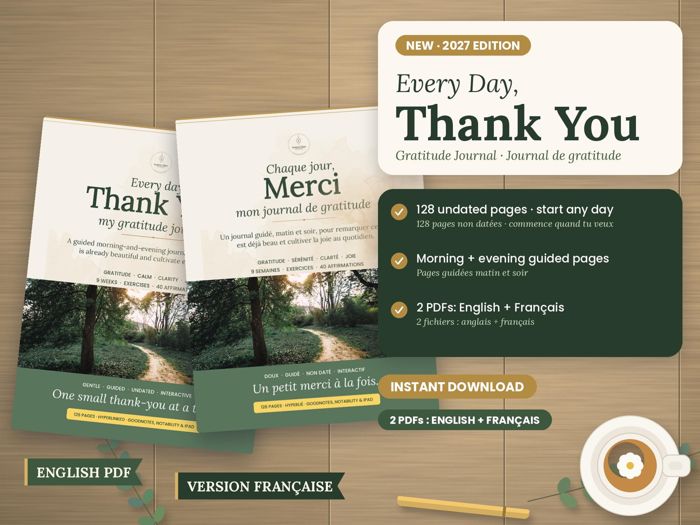
To hold on to those soft little moments, our guided morning-and-evening gratitude journal helps you notice what felt good each day. The pages are undated, so you can start any day.
Don't forget your digital photos
These days, most baby photos live on a phone. That's convenient, but fragile: lose the phone and months of memories can disappear. The National Archives reminds families that digital files also need careful protection, because drives and computers can fail.
A few simple habits:
- Back up in two places, for example a cloud service and an external drive.
- Sort once a month and keep the best shots in folders like "Year 1" and "Year 2."
- Print your favorites, at least ten or so a year. A printed photo gets looked at; a photo on a phone often gets forgotten.
- Scan important papers (ultrasound, birth announcement) so you have a copy if the original fades.
Do it without pressure
You don't have to do it all now. Plenty of parents fill in the baby book late, or start the memory box when their child is three. That's okay. A few ways to keep it enjoyable:
- Keep a "to sort later" box near the door and drop things in as they come.
- Plan a keepsake date once a season, with a cup of tea, to sort, write and store.
- Let your child help as they grow: they pick their drawing of the year and tell you why they love it.
- Accept the gaps. A baby book with a few blank pages is still a treasure, because it's yours.
Frequently asked questions
What baby items are worth keeping?
Keep what tells a story: the hospital bracelet, an ultrasound, the birth announcement, a lock of hair, one or two meaningful outfits, a few drawings and a letter from you. For everything else, a photo of the item is often enough.
How do you preserve a baby's first lock of hair?
Place it in a small acid-free envelope or a small closed box with a note: name, birth date and the date of the haircut. Store it somewhere dry and away from light.
Where should you store a baby memory box?
In a lived-in room where temperature and humidity stay fairly steady, like a high shelf in a bedroom closet. Avoid the attic, basement, garage and spots near heaters.
Is it too late to start a baby book?
No. You can start at any age and fill in the early pages from memory, with help from your photos and family. What matters is starting.
Sources
- Library of Congress: Care, Handling, and Storage of Photographs
- National Archives, Prologue Magazine: Handling Photos
- Family Tree Magazine: How to Preserve Baby Keepsakes
- UNC University Libraries: Safeguarding and Sharing
This article is written with the help of artificial intelligence and reviewed by the Lantern Days team. It does not replace advice from a professional. See our Artificial intelligence page.
Subscribe and get 2 gifts


