
How to Set Boundaries Without Feeling Guilty: A Gentle, Practical Guide
You can set boundaries without drowning in guilt. The 3 types of boundaries, 7 simple steps, ready-to-use scripts, and what to do when people push back.
Published on November 11, 2026 · 5 min read

Setting a boundary means clearly saying what you will and won't accept, to protect your time, energy and well-being. The guilt that often follows is normal, especially at first. It doesn't mean you're doing something wrong. More often, it means you're doing something new.
Here are the main types of boundaries, a 7-step method, scripts you can use today, and ways to ease the guilt.
Why saying no feels so hard
Many women grew up believing that a good person is always available, never a bother, and puts everyone else first. Saying no can then feel selfish, disappointing, or even risky, as if you might lose people's love.
Mayo Clinic Health System offers a simple, freeing idea: you can't control what other people think, feel or do. You are responsible for your own thoughts, feelings and actions. If someone is disappointed by your no, that disappointment belongs to them. You can be kind about it without carrying it for them.
Karen Salerno, a social worker at Cleveland Clinic, puts it another way: setting healthy boundaries isn't selfish. It's a form of self-care.
The 3 main types of boundaries
Cleveland Clinic describes three.
- Physical boundaries protect your personal space and comfort: not hosting overnight guests, asking not to be touched, keeping your bedroom a calm space.
- Emotional boundaries protect your feelings: not discussing your dating life with a coworker, not becoming a friend's nightly sounding board for every problem.
- Time boundaries protect your availability and energy: not answering work email in the evening, turning down a third volunteer committee.
You can add money boundaries too: whether you lend, how much you chip in for a group gift, sticking to your budget.
7 steps to set boundaries
1. Take stock of what weighs on you
Mayo Clinic Health System suggests asking a few questions: Which relationships cause you stress? Do you feel mistreated? Does other people's approval depend on you always saying yes? Write down the situations that keep coming up.
2. Know your needs
Before telling anyone where your line is, know it yourself. What drains you? What fills you up? How much can you realistically give this week?
3. Start small
Cleveland Clinic recommends practicing with low-stakes boundaries first: declining a sales call, saying "I'll get back to you tomorrow" instead of an instant yes. Every small win builds confidence.
4. Be clear and specific
Hints rarely work. "I've been a bit tired lately…" leaves lots of room for interpretation. "I can't babysit on Saturday" is clear.
5. Use "I" statements
Talk about what you need rather than what the other person does wrong. "I need my evenings to rest" lands better than "You always call too late."
6. Decide what you'll do if it's crossed
A boundary without follow-through is just a suggestion. You can say what you'll do: "If the conversation turns insulting, I'll hang up." Then do it, calmly.
7. Stay consistent and adjust
Consistency helps people understand your boundary is real. And boundaries can change over time: Mayo Clinic Health System suggests a weekly or monthly check-in, especially during busy or stressful seasons.
Boundary scripts you can use today
Keep a few in mind, or save them in your phone.
- "Thanks for thinking of me, but I can't this time."
- "I don't have room in my schedule right now."
- "Let me think about it and get back to you tomorrow."
- "I'm not comfortable talking about that."
- "I can help for an hour, not the whole afternoon."
- "I don't answer work messages after 6 p.m. I'll get back to you in the morning."
- "I understand you're disappointed. My answer is still no."
Notice that you don't need long explanations. The more you justify, the more there is to negotiate.
When people push back
Some people will test your boundary, especially if they're used to you saying yes. Cleveland Clinic suggests starting with a gentle reminder and, if the pressure continues, switching to firmer, simpler language, such as: "I've already shared my answer, and it hasn't changed."
Remember, too, that people who care about your well-being will come to respect your limits, even if it takes them time to adjust. Those who never respect them are teaching you something important about the relationship.
How to ease the guilt
Guilt often shows up right after the no. A few ways to move through it:
- Name it. "I feel guilty, and that's normal: this is new for me."
- Check the facts. Did you actually harm someone, or did you simply decline a request? Those aren't the same thing.
- Remember your why. Your boundary protects something precious: your health, your family, your rest.
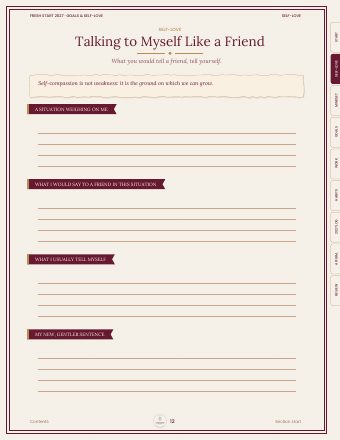
- Talk to yourself like a friend. If a friend told you she'd turned down working on a Sunday, would you call her selfish?
- Give it time. Guilt usually fades as you practice and see that the relationship survives.
A book to walk you through it
If you're a lifelong yes-person, a good book can help you understand where it comes from and practice with real examples. Therapist Nedra Glover Tawwab's bestseller has become a go-to: it explains the different kinds of boundaries, the signs you need them, and offers scripts and exercises for family, work, love, friendship and technology.
Put your boundaries on paper
Writing your boundaries down makes them feel real. A simple "What I accept / What I no longer accept" page, reread now and then, helps you stay true to yourself when the pressure builds.
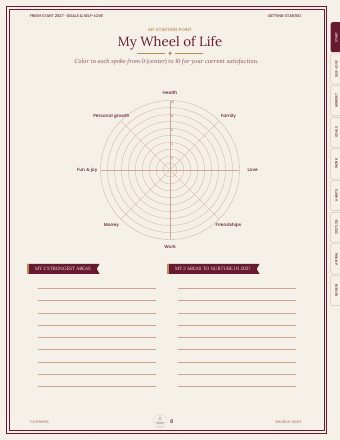
My Journal for a Fresh Start 2027 includes a full section on self-love and mindset, with pages on self-compassion, boundaries and confidence. It's a place to prepare your scripts, note what went well, and see how far you've come over the months.
Frequently asked questions
Is it selfish to set boundaries?
No. Boundaries let you stay available to others without burning out. As Cleveland Clinic puts it, setting healthy boundaries isn't selfish; it's self-care.
How do I set boundaries with family?
Start with one specific situation, pick a calm moment to talk, and use "I" statements. Old family patterns come back fast, so expect to repeat your boundary several times, kindly and firmly.
What if someone gets angry when I say no?
You can acknowledge their feeling ("I can see you're disappointed") without changing your answer. Their reaction doesn't make your boundary wrong. If someone often responds with anger, threats or intimidation, talk to someone you trust.
How long until I stop feeling guilty?
It varies a lot. For most people, guilt fades with practice. Every boundary you set and keep makes the next one a little easier.
Sources
- Cleveland Clinic: How To Set Boundaries
- Mayo Clinic Health System: Setting boundaries for well-being
- Penguin Random House: Set Boundaries, Find Peace by Nedra Glover Tawwab
This article is written with the help of artificial intelligence and reviewed by the Lantern Days team. It does not replace advice from a professional. See our Artificial intelligence page.


Subscribe and get 2 gifts


