
How to Stop Overthinking at Night: 9 Simple Ways to Quiet Your Mind
Racing thoughts at bedtime? 9 simple ways to stop overthinking at night: a bedtime to-do list, scheduled worry time, a calm evening routine and more.
Published on November 11, 2026 · 5 min read

You get into bed, the lights go out, and your brain switches on: that conversation from lunch, tomorrow's to-do list, a worry you can't shake. To stop overthinking at night, the goal isn't to force your thoughts to go quiet. It's to give them somewhere to go before bed: write them down, set aside worry time earlier in the day, and build a calm routine that tells your body the day is done. Here are nine simple strategies, backed by trusted sources.
Why overthinking gets worse at night
During the day, you're busy: work, kids, errands, screens. At night, in the dark and the quiet, there's nothing left to distract your mind. All the thoughts you pushed aside come rushing back at once. Being tired also makes problems feel bigger than they are, so you end up replaying the same scene over and over without getting anywhere.
Ruminating isn't the same as thinking something through. Problem-solving leads to a decision or an action; rumination goes in circles. The strategies below aim to turn that loop into something useful, or to press pause on it until morning.
1. Write a to-do list before bed
This is one of the best-supported techniques. Psychologists at Baylor University in Texas studied 57 young adults in a sleep lab. Half wrote down what they needed to do over the next few days before bed; the other half wrote about tasks they'd already finished. Those who wrote to-do lists fell asleep about nine minutes faster on average, and the more specific the list, the stronger the effect.
The likely reason: once your tasks are on paper, your brain no longer has to keep holding onto them so you won't forget.
Try it tonight: take five minutes sitting on your bed and write down everything you need to do tomorrow and the day after. Be specific: "call daycare at 9 a.m." rather than "daycare."
2. Schedule "worry time" earlier in the day
Cleveland Clinic recommends a technique many people find surprisingly helpful: set aside about 30 minutes a day to write down your worries. During that window, you list everything on your mind, then sort it: what you can do something about, and what's out of your control.
Pick a time in the late afternoon or early evening, never right before bed. Later, if a worry pops up, you can tell yourself: "I already wrote that down. I'll deal with it tomorrow during worry time."
3. Make a plan for your "what ifs"
A lot of overthinking starts with "What if...?" What if I lose my job? What if she's mad at me? Cleveland Clinic suggests answering those thoughts with a plan: if the worst did happen, what would you do? Write down two or three concrete steps. Once there's a plan on paper, the fear often loses some of its grip.
4. Question the thought that keeps coming back
When a thought is stuck on repeat, ask it a few questions:
- Is this a fact or an interpretation?
- What's the evidence for and against it?
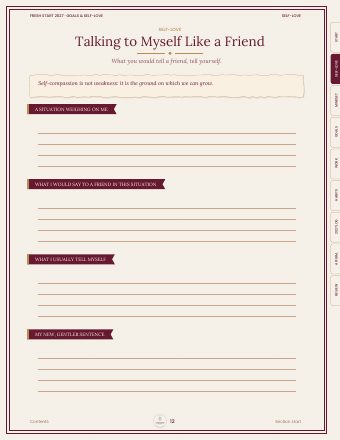
- What would I tell a friend who was thinking this?
- Will this still matter a year from now?
This is the basic idea behind cognitive behavioral therapy (CBT), which Cleveland Clinic recommends for people who overthink a lot: notice negative thoughts, challenge them and replace them with more balanced ones.
5. Keep a notebook and a soft light by your bed
Wake up at 2 a.m. with a thought that won't let go? Instead of reaching for your phone, jot it down and go back to sleep. A notebook you love, always in the same spot, makes that easy. A soft wearable reading light lets you write or read a few pages without turning on the overhead light or waking the person next to you.
6. End the day with three small gratitudes
The Centers for Disease Control and Prevention (CDC) suggests writing down specific things you appreciate each day. At night, it's a good counterweight to overthinking: instead of replaying what went wrong, you notice three things that felt good. They can be tiny: a warm meal, a fit of laughter, a walk in the sun.
Our Every Day, Thank You journal includes a guided evening page that takes just a few minutes, so you can end the day on a softer note.
7. Put away screens and the news
The CDC recommends limiting time spent on the news and social media, which can be upsetting. At night, scrolling through stressful headlines or messages often feeds the overthinking. Try leaving your phone outside the bedroom 30 to 60 minutes before bed and swapping it for a book, soft music or a conversation.
8. Build a calming evening routine
Your body loves cues. Doing the same few things each night (tidying the kitchen, a warm shower, a few stretches, your to-do list, three gratitudes, a book) tells your mind the day is over. The CDC also notes that a consistent sleep and wake schedule helps you manage stress. Your routine doesn't have to be perfect: a few repeated steps are enough.
9. Gently redirect your attention
If thoughts still creep in once you're in bed, don't fight them. Gently shift your focus: breathe slowly and count your exhales, picture a place where you feel safe in vivid detail, or silently name five things you can hear. Cleveland Clinic mentions meditation, reading and walking as healthy distractions that help calm the mind day to day.
What if your thoughts are about your goals?
A lot of nighttime overthinking is about the future: "I'm not getting anywhere," "I don't know where to start." In that case, the best fix is often a clear plan made in daylight. Our Fresh Start 2027 journal helps you break your goals into small steps, month by month, so your mind doesn't have to carry it all at bedtime.
When to talk to a professional
Cleveland Clinic recommends seeking help if worrying becomes hard to control or gets in the way of your concentration, work or sleep. Your doctor or a therapist can help, including with CBT. If your thoughts turn very dark, or you have thoughts of harming yourself, reach out for help right away.
Frequently asked questions
Why do I overthink when I go to bed?
At night there are no distractions left, and fatigue makes problems feel bigger. The thoughts you set aside during the day all come back at once. Giving them a place earlier, like a list or a worry window, helps settle them.
Does writing before bed really help?
A Baylor University study found that young adults who wrote a specific to-do list before bed fell asleep about nine minutes faster on average than those who wrote about completed tasks. It was a small study, but the habit is simple and low-risk.
What should I do if I wake up at night with racing thoughts?
Skip the phone. Write the thought in a notebook by your bed, then bring your attention back to your breathing or a calming image. If you're awake for a long time, getting up to read a few pages under a soft light can help.
Is overthinking the same as anxiety?
Everyone overthinks sometimes. But if the thoughts are frequent, hard to stop and affect your sleep or your life, talk to your doctor or a therapist: there are effective approaches that can help.
Sources
- Baylor University: Trouble falling asleep? Baylor prof's research identifies a simple trick that can help
- Cleveland Clinic: How To Stop Overthinking, Tips and Coping Strategies
- CDC: Managing Stress
This article is written with the help of artificial intelligence and reviewed by the Lantern Days team. It does not replace advice from a professional. See our Artificial intelligence page.
To go further




Subscribe and get 2 gifts


