
Pet Loss Grief: How to Cope With the Death of Your Dog or Cat
Losing a dog or cat truly hurts. Why pet loss grief runs so deep, guilt after euthanasia, helping kids and other pets, and gentle ways to remember.
Published on November 11, 2026 · 4 min read

Losing a pet means losing a member of your family. What you're feeling is real grief, and it deserves to be taken seriously, even if some people around you don't seem to get it. Your dog, cat or rabbit was part of every single day: waking up, mealtimes, coming home. Now their absence shows up everywhere. There's no "right" amount of time to grieve a pet, but there are gentle ways to move through it.
Why losing a pet hurts so much
Pets love without conditions. They don't judge, they're there on the good days and the hard ones, and they depend on you completely. For many people, it's one of the simplest and most honest bonds in life.
The American Veterinary Medical Association (AVMA) points out that grief can't be ranked or compared: losing a pet can be just as devastating as losing a person. It also names something many pet owners recognize right away: the silence in the house after a pet dies can be overwhelming.
Pet loss grief often touches:
- your routine: walks, feeding times and bedtime rituals disappear overnight;
- your identity: you were "Max's mom" or "the person with the orange cat," and that role changes;
- your story: your pet may have been by your side through a move, a breakup, a new baby or another loss.
When others don't understand
One of the hardest parts is when people minimize it: "It was just a dog," or "You can always get another cat." The AVMA notes that others may not recognize how important the bond was. You don't have to justify your sadness. It reflects the love you gave and received.
If you feel misunderstood, look for people who have lost a pet themselves. They usually understand without needing an explanation.
Guilt after euthanasia
Many people feel intense guilt after choosing euthanasia: "Was it too soon? Too late? Should I have noticed the signs earlier?" These questions are incredibly common.
A few thoughts that may help:
- You made a painful decision out of love, to spare your pet from suffering.
- You decided with what you knew at the time, not with what you know now.
- There's almost never a "perfect moment." There's only a decision made with care.
If the guilt keeps looping, talking it through with your veterinarian can help. They can explain what your pet was going through and why the choice was a reasonable one.
What helps in the first weeks
The AVMA suggests several ways to cope. Here they are, with some concrete ideas.
Grieve at your own pace
It can take weeks or months for the sharpest pain to soften. Crying, talking about your pet and looking at photos are all normal parts of grieving.
Let your feelings out
Instead of holding the sadness in, give it somewhere to go: talk to a friend, write, draw. Writing a letter to your pet is a simple gesture that can feel surprisingly comforting. You can thank them, tell them your favorite memories, or even ask for forgiveness if you feel guilty.
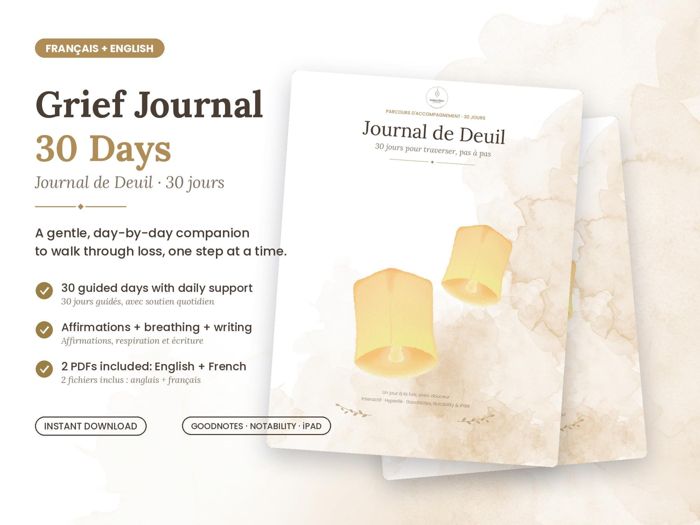
A guided journal can walk with you day by day, with gentle prompts for the days you don't know where to start.
Gently rework your routine
The moments your pet filled the most are often the hardest: early morning, dinnertime, walking through the door after work. Try to fill those moments with something else for a while: a walk on your own, a call with a friend, a cup of tea in the same spot.
Keep their memory close
Looking at photos, writing a tribute, keeping their collar or favorite toy: these things become gentle anchors. Many people also treasure a paw print, often taken at the vet clinic or at home before or right after their pet passed.
Helping children through pet loss
For many kids, the death of a pet is their first experience with death. It's a chance to show them that it's okay to be sad, to talk about it and to keep loving.
- Tell the truth in simple words: "Kitty died. Her body stopped working, and she won't come back."
- Skip "she went to sleep": young children may become afraid of falling asleep themselves.
- Let them take part: drawing a picture, choosing a photo, planting a flower.
- Let them see your sadness: it teaches them crying is okay.
Our article on how to explain death to a child offers age-by-age words if you'd like more guidance.
What about your other pets?
If you have another pet, they may also seem unsettled: searching for their companion, eating less or asking for more attention. Keep their routine as steady as you can and give them extra time and affection. If a change in behavior lasts, check in with your vet.
When should you get another pet?
There's no right answer. Some people need to give love again quickly; others wait months or years. What matters is not adopting to "replace" your pet or to quiet the grief, but when you feel ready to welcome a new animal for who they are.
Creating a small goodbye ritual
A ritual can help you say goodbye, especially if you couldn't be there at the end:
- light a candle next to their photo;
- write their name on a stone and place it in the garden;
- take one last walk on their favorite route;
- donate to an animal shelter in their name;
- gather their photos in an album or memory box.
For the dates that come back every year, like their adoption day or the day they died, a keepsake journal helps you hold on to everything they brought into your life.
When to reach out for help
If grief keeps you from functioning for a long time, if you're pulling away from everyone, if you can't sleep or eat, or if you have thoughts of harming yourself, talk to your doctor, a therapist or a grief support group. There are also hotlines devoted to pet loss, like the one run by Cornell University's College of Veterinary Medicine.
Frequently asked questions
Is it normal to grieve my dog more than some people I've lost?
Yes. Your pet was part of your daily life, every day, often for many years. The depth of grief depends on the bond and the presence in your life, not on the species.
How long does pet loss grief last?
There's no set timeline. The sharpest pain often eases over weeks and months, but waves of sadness can come back on certain dates or when you see an animal that looks like yours.
What should I do with my pet's things?
There's no rush. Keep what matters to you (collar, toy, blanket) and donate the rest to a shelter when you feel ready.
How can I support a friend who lost their pet?
Acknowledge their loss ("I know how much you loved her"), say the pet's name, share a memory, and avoid suggesting a new pet right away.
Sources
- AVMA: Coping with the loss of a pet
- Cornell University College of Veterinary Medicine: Pet Loss Support Hotline
- HealthyChildren.org (American Academy of Pediatrics): How Children Understand Death
This article is written with the help of artificial intelligence and reviewed by the Lantern Days team. It does not replace advice from a professional. See our Artificial intelligence page.
To go further




Subscribe and get 2 gifts


