
How to Create a Relaxing Evening Routine: 10 Simple Steps to Wind Down Before Bed
Want calmer nights? How to build a relaxing evening routine in 30 to 60 minutes: dim lights, phone away, a quick journal, a book and a steady bedtime.
Published on November 11, 2026 · 4 min read

Most days end in a rush: dishes, lunches, one last email, and then you collapse into bed with your mind still racing. A relaxing evening routine is a short set of steps you repeat in the same order during the 30 to 60 minutes before bed. It tells your body and mind the day is over: dim the lights, put screens away, empty your head onto paper, do something gentle, and go to bed at roughly the same time each night. Here's how to build yours, without aiming for perfect.
Why an evening routine helps
Your body loves cues. When the same steps happen every night in the same order, they become a signal that it's time to slow down. Mayo Clinic recommends keeping a consistent bedtime and wake-up time, even on weekends, limiting light and screens in the evening, and doing calming things like taking a bath or practicing relaxation techniques before bed.
A routine won't fix everything. But it swaps "falling asleep scrolling" for time that belongs to you, and that's a real change.
1. Pick a realistic bedtime
Everything starts here. Look at when you need to wake up, then count back at least seven hours, which is what Mayo Clinic recommends for adults. Your routine starts 30 to 60 minutes before that. If your current bedtime is very late, move it earlier 15 minutes at a time.
A simple trick: set a gentle alarm on your phone, not to wake you up, but to remind you to start winding down.
2. Close out the day with one small action
Pick something that says "done": turning off the kitchen light, packing your bag for tomorrow, wiping the counter. It's not about chores; it's a signal. When the same action shows up every night, your mind learns to let go.
3. Dim the lights
Bright overhead lights keep your brain in daytime mode. In the hour before bed, switch to a lamp with warm, low light. Mayo Clinic suggests limiting light exposure in the evening and keeping your bedroom cool, dark and quiet.
4. Put your phone away (for real)
This is often the hardest step and the one that makes the biggest difference. Your phone brings email, upsetting news and endless scrolling. Try charging it outside the bedroom, or at least across the room, 30 to 60 minutes before sleep. The National Institute of Mental Health (NIMH) also suggests reducing blue light from screens before bed.
The catch is usually your alarm: if your phone wakes you up, it sleeps next to you. A separate alarm clock solves that. Some even simulate a gentle sunrise in the morning and offer a soft reading light at night.
5. Do a quick brain dump
If your mind switches on the moment the lights go off, it's often because things are left hanging. Mayo Clinic suggests trying to resolve worries before bed, or writing them down and setting them aside for tomorrow. A Baylor University study even found that young adults who wrote a specific to-do list before bed fell asleep faster, on average, than those who wrote about tasks they had already completed.
Take five minutes: what you need to do tomorrow, what's bothering you, and one small possible step for each worry.
6. End on three good things
After the list, turn the page toward what went well. NIMH recommends naming specific things you're grateful for each day, whether you write them down or simply reflect on them. Evening is the perfect time: a warm meal, a text from a friend, your child's laugh.
Our Every Day, Thank You journal has a guided evening page designed for this moment: a few lines, and your day ends on a softer note.
7. Care for your body, gently
A warm shower or bath, lotion on your hands, a few slow stretches on the floor, brushing your hair. These aren't treatments; they're ways of moving out of your head and into your body. Save harder workouts for earlier in the day; Mayo Clinic advises against being very active too close to bedtime.
8. Choose a calm activity you enjoy
Read a few pages of a novel (ideally a paper one), listen to soft music, work on a puzzle, knit, color. The goal isn't to be productive. It's to do something slow that you like, without a screen.
9. Watch what you eat and drink at night
Nothing complicated here: Mayo Clinic suggests avoiding heavy meals within a couple of hours of bedtime, not going to bed hungry or overly full, and being careful with caffeine and alcohol, whose effects can last for hours and disrupt sleep later in the night.
10. If sleep won't come, don't force it
If you're not asleep after about 20 minutes, Mayo Clinic suggests leaving the bedroom and doing something relaxing, like reading or listening to soothing music, then going back when you feel tired. Keep the same wake-up time the next morning.
A sample 45-minute evening routine
Here's a template to adapt to your life:
- 9:15 p.m. Close the kitchen, get things ready for tomorrow.
- 9:20 p.m. Dim the lights, plug in your phone in the living room.
- 9:25 p.m. Warm shower, pajamas, hand cream.
- 9:40 p.m. Five-minute to-do list, then three good things.
- 9:45 p.m. Read in bed with a small lamp.
- 10:00 p.m. Lights out.
Have kids? Start your routine after they're in bed, even if it's only 15 minutes long. A short routine you actually keep beats a long one you abandon.
Want to make it stick?
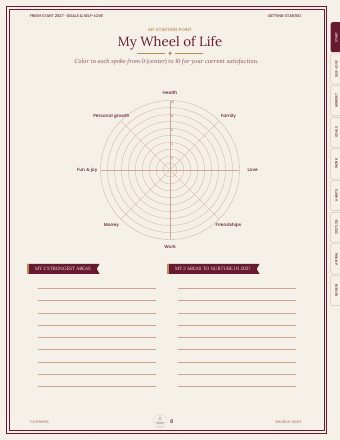
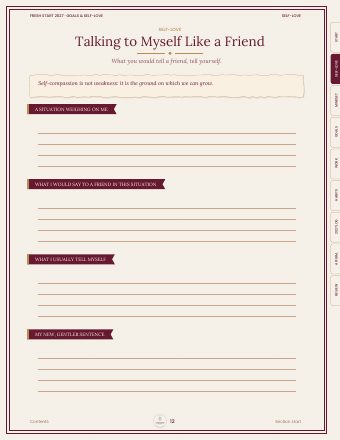
Start with one step, not ten. The same one every night for two weeks. Then add another. Our Fresh Start 2027 journal is built to help you install one habit at a time, with a simple tracker so you can see your progress.
When to talk to a professional
If you often have trouble sleeping, Mayo Clinic recommends talking to your health care provider, since underlying causes can be identified and treated. And if your evenings are filled with very dark thoughts or thoughts of harming yourself, reach out for help right away.
Frequently asked questions
How long should an evening routine be?
For most people, 30 to 60 minutes works well, but 15 minutes is better than nothing. What matters most is consistency: the same steps, in the same order, at roughly the same time.
What can I do at night to relax without screens?
Read a paper book, write in a journal, take a warm shower, do slow stretches, listen to soft music, work on a puzzle or color. Choose a calm activity you genuinely enjoy.
Should I go to bed at the same time on weekends?
Mayo Clinic recommends a consistent bedtime and wake-up time every day, weekends included. A small difference is fine, but a big shift can make Monday harder.
My routine doesn't work every night. Is that normal?
Yes. A routine isn't a magic formula, and some nights will be more restless than others. Keep it anyway: it's the repetition, week after week, that makes it useful.
Sources
- Mayo Clinic: Sleep tips, 6 steps to better sleep
- NIMH: Caring for Your Mental Health
- Baylor University: Trouble falling asleep? Baylor prof's research identifies a simple trick that can help
This article is written with the help of artificial intelligence and reviewed by the Lantern Days team. It does not replace advice from a professional. See our Artificial intelligence page.
To go further



Subscribe and get 2 gifts


