
Self-Care When You Have No Time: 15 Ideas That Take 1 to 15 Minutes
No time for self-care? 15 realistic ideas that take 1 to 15 minutes, from protecting the basics to tiny breaks, for self-care that actually fits your day.
Published on November 11, 2026 · 4 min read

When you hear "make time for yourself," you probably picture a spa day, a weekend away or an hour-long yoga class. And when you have a job, kids, a home and maybe an aging parent to help, that feels impossible. Self-care when you have no time starts with protecting the basics (sleep, food, a little movement, connection), then slipping tiny 1- to 15-minute breaks into moments that already exist in your day. You don't need an hour. Here are 15 realistic ideas.
Real self-care is usually simple
The National Institute of Mental Health (NIMH) describes self-care as doing things that help you live well and improve your physical and mental health. Its advice is surprisingly ordinary: move regularly, eat regular meals and drink enough water, keep a steady sleep schedule, try relaxation, set priorities, notice what you're grateful for, and stay connected with people who support you.
In other words, self-care isn't a luxury stacked on top of an already full life. It's often small things you already do, or could do a little better.
Start with the basics (no guilt)
Before candles and bubble baths, check the four foundations. If one of them is crumbling, start there.
- Sleep: going to bed 15 minutes earlier is self-care.
- Food: a real meal, sitting down, even a simple one, instead of eating the kids' leftovers standing up.
- Water: a full water bottle always within reach.
- Movement: NIMH notes that 30 minutes of walking a day can boost your mood, and shorter bouts count too.
1-minute ideas
1. Three slow breaths. Before you start the car, before you open your inbox, before you walk in the door. In through your nose, slowly out through your mouth. Utah State University Extension notes that even a few minutes of deep breathing a day can help reduce stress.
2. A pause at the door. Step outside for a minute, look at the sky, feel the air. Even in winter.
3. A full glass of water, slowly. A basic act that says "I count too."
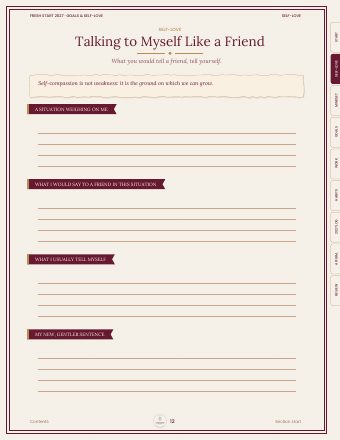
4. One kind sentence to yourself. Swap "I'm failing" for "I'm carrying a lot today." NIMH suggests learning to notice and challenge negative or unhelpful thoughts.
5-minute ideas
5. Five minutes of a hobby. Read a few pages, sketch, play an instrument, water your plants. Utah State University Extension suggests spending just five minutes on a hobby you enjoy: short, but yours.
6. Text a friend. Not to plan anything, just to say "thinking of you." Connection is one of NIMH's core self-care habits.
7. One song you love, turned up. In the kitchen, in the car. Dance if you feel like it.
8. Tidy one tiny spot. Your purse, your nightstand, the counter. A clear space around you can make your mind feel a little lighter.
9. Three gratitudes on paper. NIMH recommends naming specific things you're grateful for each day. In the evening, five minutes is plenty. Our Every Day, Thank You journal is designed for this small moment: short, guided pages that take only a few minutes.
15-minute ideas
10. A walk around the block. On your own, with a podcast, or with a little one in the stroller. Utah State University Extension notes that time outdoors is linked to more energy and better well-being.
11. A shower or bath without your phone. Door closed. The kids can wait fifteen minutes.
12. Coffee or tea, sitting down, really sitting. Without doing anything else. Just you and your mug.
13. A short nap, if your day allows, kept short and not too late in the day so it doesn't get in the way of sleep at night.
14. Write down how you feel. When everything piles up, putting words on paper helps you sort it out. It doesn't have to be well written.
15. Plan your week with a slot for you. NIMH advises separating what must get done now from what can wait, and saying no to new tasks when you feel overloaded. Spend fifteen minutes on Sunday looking at your week, and pencil in real time for yourself.
Where to find those minutes
The trick is to attach your breaks to moments that already exist:
- While waiting: at daycare pickup, at the doctor's office, in the car before you go inside.
- During transitions: between work and home, between dinner and bath time.
- By swapping: five minutes of scrolling become five minutes of reading or breathing.
- By asking: "Can you take the kids for 20 minutes? I need a walk."
Why it feels selfish (and why it isn't)
Many women, especially moms and caregivers, have learned that their own needs come last. But when you're running on empty, you have less patience, less energy and less warmth for everyone else too. Caring for yourself is also caring for the people you love. And you deserve that care for your own sake, not only because you're useful to others.
Pick just one to start
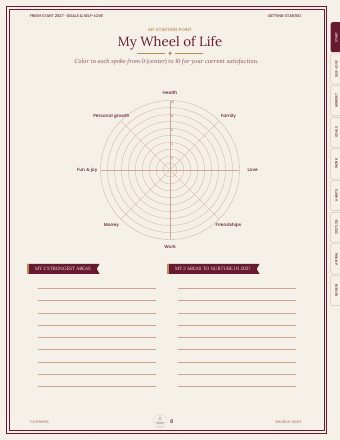
Don't give yourself 15 new chores. Pick one idea, just one, and do it every day for a week. Then add another if you want to. Our Fresh Start 2027 journal helps you build small habits like these one at a time, with a simple tracker.
When self-care isn't enough
Sometimes exhaustion or sadness is bigger than any break can fix. NIMH recommends seeking help if, for two weeks or more, you've had distressing symptoms such as trouble sleeping, appetite changes, difficulty getting out of bed or concentrating, loss of interest in things you used to enjoy, or irritability. Start by talking to your primary care provider. And if you're having thoughts of harming yourself, reach out for help right away.
Frequently asked questions
How can busy moms practice self-care?
Start with the basics (sleep, meals, water, a little movement), then attach small breaks to moments you already have: naptime, the morning commute, the hour after bedtime. And ask for help specifically: "20 minutes so I can walk."
Is it selfish to take time for yourself?
No. Taking care of yourself gives you more energy and patience for others, and above all, you need it and deserve it, like everyone else.
What are some free self-care ideas?
Walking outside, slow breathing, writing three gratitudes, calling a friend, reading, listening to music, a phone-free shower, an earlier bedtime. Most of the things that help the most cost nothing.
How long does it take for self-care to make a difference?
There's no magic timeline. But small things repeated every day often end up mattering more than one big day off a year.
Sources
- NIMH: Caring for Your Mental Health
- Utah State University Extension: Bite-sized Strategies to Make Time for Mental Health
- Mayo Clinic: Sleep tips, 6 steps to better sleep
This article is written with the help of artificial intelligence and reviewed by the Lantern Days team. It does not replace advice from a professional. See our Artificial intelligence page.
To go further



Subscribe and get 2 gifts


