
What Is the Mental Load? 8 Ways to Lighten It When You're the One Who Remembers Everything
Always the one who remembers everything? What the mental load is, what research says, and 8 practical ways to lighten it: write it down, share it, simplify.
Published on November 11, 2026 · 6 min read

The dentist appointment. The birthday gift for Saturday's party. The milk you're almost out of. Picture day money. Calling your mother-in-law back. You may not do every one of these things yourself, but you're the one who keeps track of them. The mental load is the invisible work of planning, anticipating and remembering that keeps a household running. To lighten it, you first make it visible (write it all down), then share it for real (not just the tasks, but the job of thinking about them), and finally drop what doesn't need doing. Here's how, step by step.
What the mental load actually is
Household work comes in two parts. There's the work you can see: cooking, laundry, driving kids around. And there's the work nobody sees: noticing the kids have outgrown their winter boots, knowing which child needs what, building the family schedule, remembering your aunt's birthday. Researchers often call this second kind cognitive labor or invisible labor. Most of us just call it the mental load.
It's exhausting because it never clocks out. You can finish the dishes; you never finish thinking about what comes next. And because it's invisible, it rarely gets credit, even from the person carrying it.
What the research shows
In a 2019 study published in the journal Sex Roles, researchers from Arizona State University and Oklahoma State University surveyed 393 partnered American mothers. Nearly 9 in 10 said they felt solely responsible for organizing the family's schedule, even though 65% of them had jobs. Feeling solely responsible for the children's well-being was linked to feelings of emptiness and to lower satisfaction with life and with their partnership.
More recent research with over 2,000 U.S. parents, shared by policy researchers at the University of Bath, points the same way: mothers reported being mainly responsible for far more household management than fathers. And when mothers worked longer hours or earned more, they did less of the physical housework, but their mental load didn't shrink.
The takeaway is simple: if it feels like you're the one holding everything in your head, you're not imagining it. It's real work, and it's heavy.
1. Do a full brain dump
Step one is making the load visible. Grab a sheet of paper and write down everything on your mind, without sorting it: appointments, bills, errands, calls, ideas, worries. The list may be longer than you expected. That's the point: it's everything your brain was trying to hold.
Then sort each item into four columns:
- This week
- Later (give it a date)
- Hand off to someone else
- Let go of entirely
Simply getting it on paper brings relief, because your brain no longer has to keep it all "on file."
2. One shared place for the whole family
A big piece of the mental load comes from being the household's living calendar. Put the family schedule somewhere everyone can see it: a shared calendar app on everyone's phone, or a big dry-erase board on the fridge. What matters is that every adult (and kids who are old enough) can check it and add to it without going through you.
3. Share the responsibility, not just the task
"Just tell me what to do" comes from a good place, but it keeps the load on you: you're still the one thinking and assigning. Real sharing means handing over a whole area. For example, your partner owns the kids' medical appointments: remembering them, booking them, putting them on the calendar, going, and following up.
A few ways to bring it up without a fight:
- Pick a calm moment, not the middle of a meltdown.
- Show them your brain-dump list. It makes invisible work concrete.
- Talk about "we": "How could we split this up better?"
- Let them do it their way. If you redo it, the load comes right back to you.
4. Hold a short weekly family check-in
Fifteen minutes, same day every week, like Sunday evening. Look at the week ahead: who's driving whom, what's for dinner, which appointments are coming up, what you're running low on. This small habit prevents surprises and divides the work before it lands on you by default.
5. Simplify everything you can
Every decision costs energy. The fewer decisions you have to make, the more room your mind has:
- A basic meal rotation that repeats weekly (pasta Mondays, soup Thursdays).
- A standard grocery list you just check off.
- Automatic payments for recurring bills.
- Outfits picked out the night before with the kids.
- A small stash of birthday gifts bought ahead and kept in a box.
6. Lower the bar a little
Part of the mental load comes from expectations: the perfect lunchbox, the always-tidy house, the Instagram-worthy birthday party. For each task, ask yourself: "What would happen if I did this halfway, or not at all?" Often the answer is: nothing bad. That time and energy come back to you.
7. Put yourself on the calendar
The U.S. National Institute of Mental Health (NIMH) suggests a few habits for caring for your mental health: decide what must get done now and what can wait, learn to say no to new tasks when you feel overloaded, and notice what you did accomplish each day instead of only what's left. It also recommends making time for enjoyable activities and staying connected with people who support you.
Write your own time onto the family calendar, right alongside hockey practice and dance class: a walk, coffee with a friend, an hour with a book. What's written down is more likely to actually happen.
8. End the day by noticing what got done
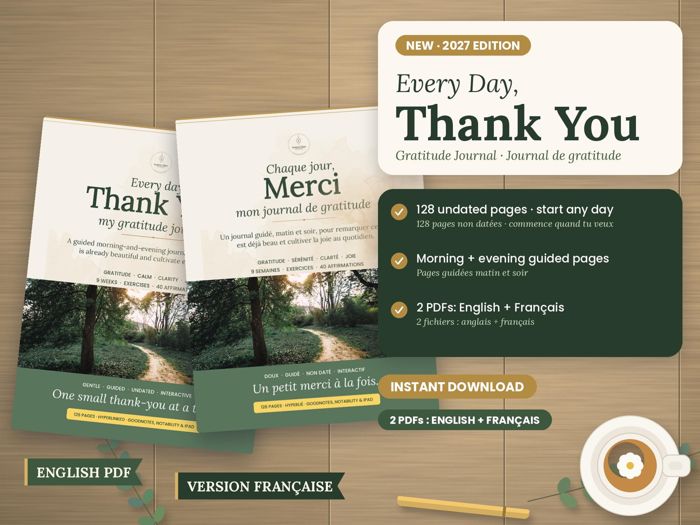
The mental load trains you to see what's missing. In the evening, take two minutes to jot down three things you got done and one good moment from the day. Our Every Day, Thank You journal has a short evening page made for exactly this: a small habit that changes how you see your days.
What about your own goals?
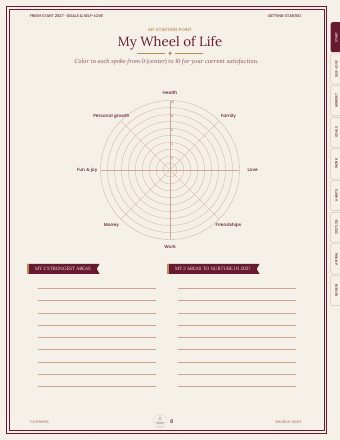
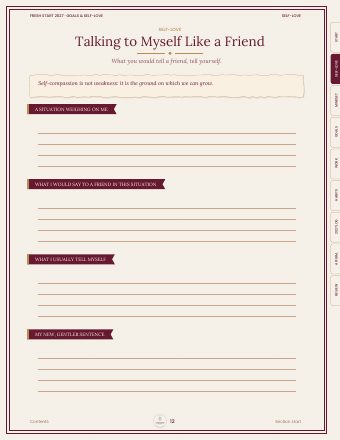
When you carry the whole family's load, your own goals tend to slide to the bottom of the list. Our Fresh Start 2027 journal helps you keep space for them: one goal at a time, broken into small steps, with simple monthly check-ins.
When the load gets too heavy
Feeling stretched thin now and then is normal. But if for two weeks or more you've had trouble sleeping, concentrating or getting out of bed, or you've lost interest in things you used to enjoy, talk to your doctor or a health professional. The Arizona State researchers also stress how much it helps to have dependable, supportive people around you: a friend, a parents' group, a sister. You don't have to carry it all alone.
Frequently asked questions
What's the difference between the mental load and household chores?
Chores are the doing: cooking, cleaning, laundry. The mental load is the thinking behind them: noticing what's needed, planning, remembering, organizing. You can split the chores and still carry the entire mental load if you're always the one who notices and asks.
How do I talk to my partner about the mental load?
Choose a calm moment and show what you carry in concrete terms, for example a list of everything on your mind in a typical week. Then agree to split whole areas (meals, appointments, kids' clothes) rather than one task at a time.
Is the mental load only a mom thing?
No. Anyone who runs a household can carry it: dads, single parents, caregivers. Research does show that in heterosexual couples with children, it falls more often on mothers.
Can an app help with the mental load?
A shared calendar or a shared grocery list can help a lot, as long as everyone uses it. A tool alone won't fix things if only one person keeps it up to date.
Sources
- Arizona State University: Invisible labor can negatively impact well-being in mothers
- University of Bath, Institute for Policy Research: Earning more doesn't lighten mothers' mental loads
- NIMH: Caring for Your Mental Health
This article is written with the help of artificial intelligence and reviewed by the Lantern Days team. It does not replace advice from a professional. See our Artificial intelligence page.
To go further


Subscribe and get 2 gifts


