
Grief Journaling: How Writing Can Help You Heal (Plus 15 Prompts)
What research says about expressive writing, how to start a grief journal, 15 grief journal prompts for the hard days, and what to keep in mind.
Published on November 11, 2026 · 4 min read

When grief feels too big to say out loud, writing it down can help. A grief journal gives you a safe place to put what you're feeling, hold on to your memories and, little by little, make sense of what you're living through. Psychology research on "expressive writing" suggests that putting emotions into words can help many people get through hard experiences. It isn't a magic fix, and it doesn't replace professional support, but it's a simple, free tool that's always within reach.
What research says about expressive writing
Psychologist James W. Pennebaker of the University of Texas at Austin has done much of the research on expressive writing. Harvard Health Publishing describes one of his early studies: college students wrote either about a deeply upsetting personal experience or about a trivial topic. Six months later, the students who had written about the upsetting experience had visited the campus health center less often. The method was simple: write for 15 minutes a day, four days in a row, continuously, about your deepest thoughts and feelings.
The American Psychological Association's Monitor on Psychology highlights another key finding: what seems to help most isn't just venting, but trying to understand and find meaning in what happened. People whose writing used more and more words like "because," "realize" and "understand" appeared to benefit more.
Why writing helps with grief
Grief fills your head with memories, regrets, unanswered questions and words you never got to say. Writing can help you:
- get thoughts out of your head so they loop less;
- sort through emotions that feel tangled together;
- preserve memories before they fade;
- talk to the person you lost and keep the bond alive in a new way;
- see how far you've come: reread your pages a few months later and you'll often notice your grief has changed shape.
What to keep in mind
The research is honest about its limits, and they matter:
- Expressive writing doesn't work for everyone. Harvard Health notes that it isn't a cure-all.
- It appears less helpful for people living with major depression or PTSD, who need professional care.
- Writing right after a traumatic event can make some people feel worse. According to Harvard Health, Pennebaker suggests waiting at least one or two months before writing in depth about a trauma.
- Reliving without making meaning can leave you feeling raw. The APA article notes that writing that helps you understand seems more beneficial than writing that only rehashes.
In practice: write at your own pace, stop if it's too much, and if writing leaves you feeling worse day after day, talk to a professional.
How to start a grief journal
Pick your format
Paper or digital, it doesn't matter. What matters is that it's yours and that no one reads it without your permission. Many people love paper because the slow movement of the hand makes them slow down. Others prefer a tablet they always have on hand.
If you go with paper, a good notebook and a pen you love make your writing time more inviting:
Set a small writing date
You don't need to write for long. Borrow from Pennebaker's method: 10 to 15 minutes, a few days in a row, or one set time each week. Before bed or with your morning coffee, whatever works for you.
Write without editing
Spelling, grammar and perfect sentences don't matter at all. Write in bullet points, single words, in anger, in tears. Nobody's grading this.
Use guided prompts
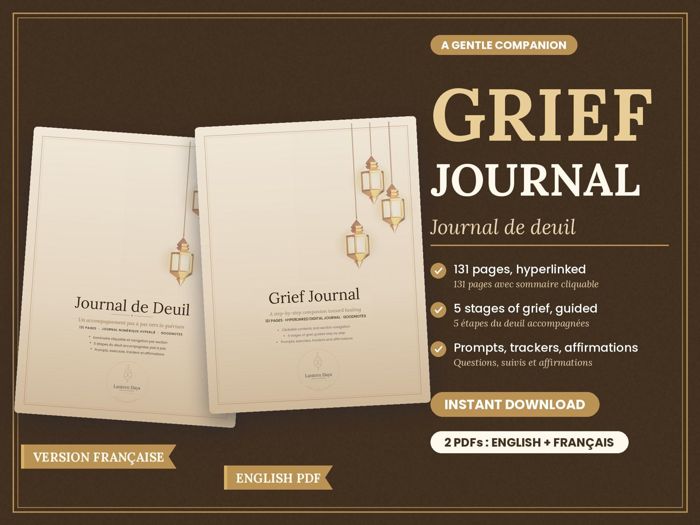
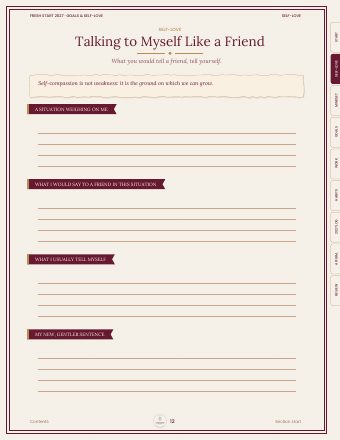
On days when the blank page feels intimidating, a prompt helps you begin. That's exactly what a guided journal is for: gentle prompts, exercises and space to write, so you don't have to figure out where to start every single time.
15 grief journal prompts to get you started
To put your feelings down
- Today, my grief feels like…
- The hardest part of this week was…
- What I wish people understood about my grief is…
- A feeling I'm afraid to say out loud…
- What I need right now is…
To hold on to memories
- A moment with you I want to remember forever…
- The way you laughed, talked, said my name…
- Something you taught me…
- An object that reminds me of you, and why…
- What I carry of you in my everyday life…
To make meaning and move gently forward
- Something I understand today that I couldn't see a month ago…
- What I would tell you if you could hear me…
- One small thing that helped me this week…
- Someone I can lean on, and how I could ask them for help…
- How I'd like to honor your memory this year…
What if I don't know where to start?
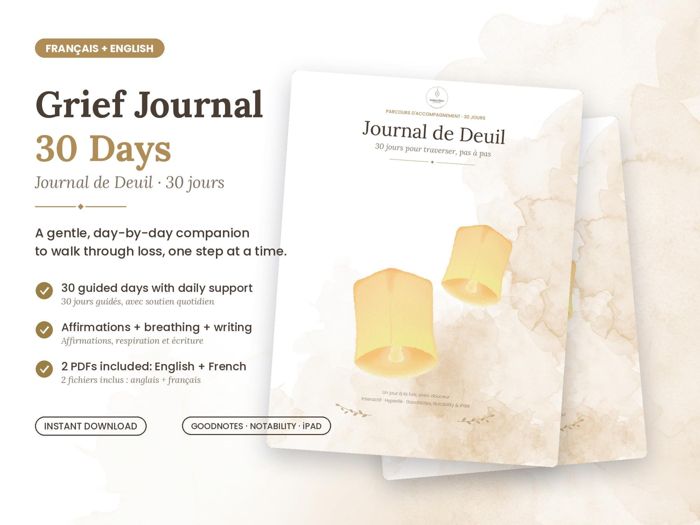
Start small. One sentence a day is enough. If you like having a clear path, a 30-day journal gives you one page per day with a single prompt at a time, so you can keep going without wondering what to write.
You can also write a letter straight to the person who died. Our article on how to write a letter to someone who died has ideas to help you begin.
When to reach out for help
Writing can walk alongside your grief, but it can't carry all of it. If you feel worse and worse, can't manage daily life, are isolating yourself, or have thoughts of harming yourself, talk to your doctor or a therapist, and reach out right away if you're in crisis.
Frequently asked questions
Does journaling really help with grief?
Research on expressive writing shows benefits for many people, especially when writing helps them understand and make sense of what happened. It doesn't work for everyone, and it isn't a substitute for professional help if you need it.
How long should I write each day?
There's no rule. Pennebaker's studies used 15 minutes a day for four days. A few minutes once or twice a week can be enough too.
Should I reread what I write?
You don't have to. Many people like to reread their pages after a few months to see how far they've come, but it's also fine to write and close the notebook.
Paper or digital grief journal: which is better?
The one you'll actually use. Paper invites you to slow down; digital is always with you. Our digital journals can be printed or used on a tablet.
Sources
- Harvard Health Publishing: Writing about emotions may ease stress and trauma
- American Psychological Association, Monitor on Psychology: Writing to heal
This article is written with the help of artificial intelligence and reviewed by the Lantern Days team. It does not replace advice from a professional. See our Artificial intelligence page.
To go further

Subscribe and get 2 gifts


