
How Long Does Grief Last? What Grief Experts Actually Say
How long does grief last? There's no deadline, but there are landmarks: the first year, waves that return, and when to reach out if the pain isn't easing.
Published on November 11, 2026 · 4 min read

There is no "normal" length of time for grief. For many people, the most intense pain gradually softens over the first year, often after the first anniversary of the death, but waves of sadness can return for years, especially around meaningful dates. Grief doesn't truly end. Instead, you learn to live alongside the absence. If, a year or more later, grief still keeps you from functioning day to day, it's time to talk to a professional.
Here's what grief experts say, what can affect how long your grief lasts, and the signs that it's worth reaching out for help.
No deadline, but some landmarks
People sometimes hear that grief should be "over" after a few months. That's simply not true, and the idea can deeply hurt those who are still in pain.
The Canadian Psychological Association explains that research doesn't point to a single timeline. It notes that an adjustment period of roughly 12 to 14 months, stretching past the first anniversary, fits what's observed in many people better than shorter estimates. It also points out that waves of grief at anniversaries or family events can continue for a lifetime, and that this is normal.
Cleveland Clinic makes a similar point: grief doesn't follow a straight line, and you never really reach a point where you're "done." The loss becomes part of your life story.
Why the first year is often the hardest
The first year is full of "firsts" without the person you love:
- their first birthday since they died;
- the first Christmas and New Year's;
- the first Mother's Day or Father's Day;
- summer vacation, back-to-school;
- and finally, the first anniversary of their death.
Each of those dates can bring the pain rushing back, sometimes harder than you expected. That's why many people find the second year feels a little different: the dates are still hard, but they're no longer happening for the first time.
Grief comes in waves
Grief doesn't fade at a steady pace. It's more like waves. At first, they're strong and close together. Over time they usually come less often, but one can still catch you off guard: a song in the grocery store, a smell, a photo.
Having a really bad day after several gentler weeks doesn't mean you're going backward. It's simply how grief works.
What can affect how long grief lasts
Every grief is unique. Several things can make it longer or heavier:
- your relationship with the person: losing a child, a partner or a close parent often turns everyday life upside down;
- the circumstances of the death: a sudden, violent or very early death can be harder to absorb;
- a complicated relationship: unresolved conflict can add guilt or anger;
- other losses at the same time: a move, a job loss, money worries;
- the support around you: feeling alone or misunderstood often makes the road longer;
- your health and energy: exhaustion and stress make everything heavier.
So there's no reason to compare your grief to anyone else's, even within your own family.
Normal grief or prolonged grief?
For most people, the pain stays present but slowly becomes more bearable. For a smaller number, it stays very intense for a long time and makes daily life hard to manage. In 2022, the American Psychiatric Association added prolonged grief disorder to the DSM-5-TR. For adults, it's only considered when the loss happened at least 12 months earlier (6 months in the World Health Organization's ICD-11). The Canadian Psychological Association notes that these time thresholds are somewhat arbitrary.
According to Cleveland Clinic, some signs that are still present a year after the loss are worth discussing with a professional:
- feeling like part of yourself has died;
- struggling to believe the loss is real;
- avoiding anything that reminds you of the person;
- emotional pain so intense it disrupts daily life;
- feeling numb, deeply lonely, or that life has lost its meaning;
- having trouble making plans or returning to normal life.
These signs are not a diagnosis. Only a professional can assess your situation. But they're a good reason to ask for support without waiting.
When to get help (you don't have to wait a year)
You don't need to wait for any particular timeline to reach out. Talk to your doctor, a therapist or a grief support organization if:
- you can't sleep, eat or get out of bed;
- you're withdrawing from everyone;
- you're relying on alcohol or other substances to get through;
- you're having thoughts of dying or harming yourself.
In that last case, call or text 988 or call 911 right away.
How to move forward, at your own pace
Time helps, but what you do with that time matters too. A few simple things:
- keep a small routine: get up, get dressed, step outside for ten minutes;
- talk about the person with someone who knew them;
- plan for hard dates ahead of time, with a small ritual;
- let the good moments in without guilt: laughing doesn't mean forgetting;
- write what you're feeling, even a few lines.
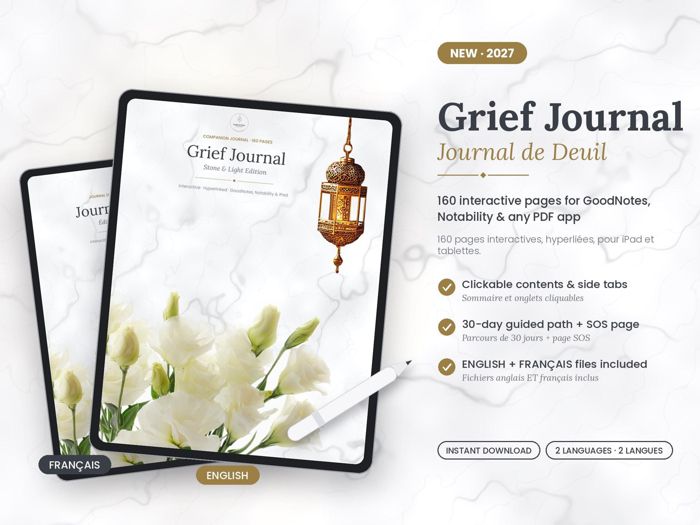
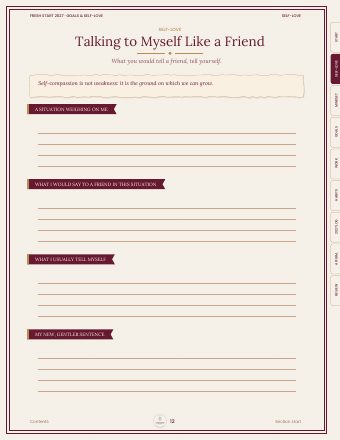
Writing also helps you see how far you've come. Rereading your pages a few months later, you may notice that some days have become a little softer. Stone & Light was designed for that whole first year: pages for each season, for the hard dates, and for the memories you want to keep.
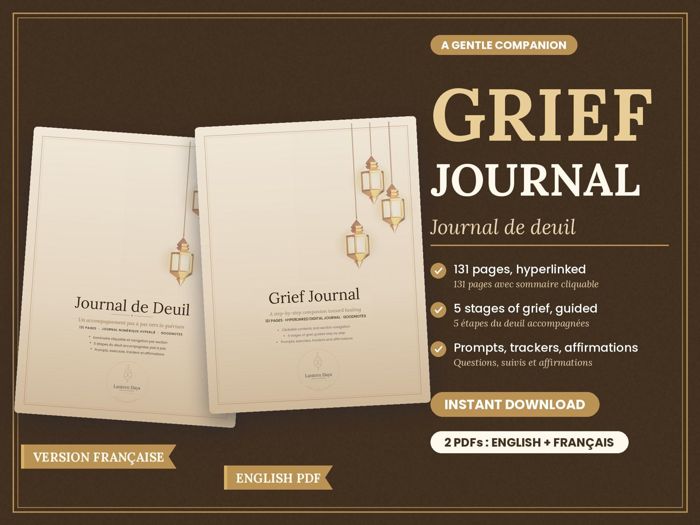
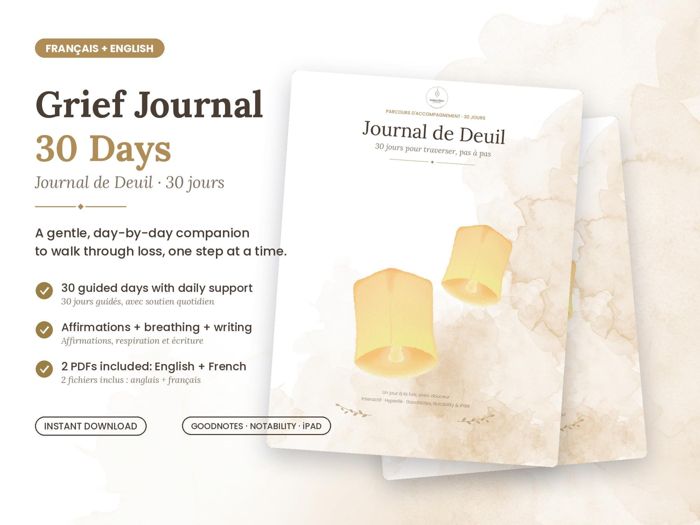
If you're at the very beginning, a shorter guided journal may be easier to start with:
Frequently asked questions
Is it normal to still be grieving two years later?
Yes. Many people still feel sadness years later, especially around important dates. What matters is whether that grief is keeping you from living your daily life. If it is, talk to a professional.
How long does grief last after losing a parent?
There's no set length. Losing a parent, even as an adult, can be deeply shaking, and the first year is often the hardest.
Does grief last longer after a sudden death?
Often, a sudden or unexpected death is harder to absorb, because there was no chance to prepare or say goodbye. It isn't a rule, but it's a good reason to look for support.
Can grief come back years later?
Yes. A life event (a wedding, a birth, a birthday) can stir up sadness long after the loss. That's a normal reaction, and it shows how much the bond mattered.
Sources
- Canadian Psychological Association: "Psychology Works" Fact Sheet: Grief in Adults
- Cleveland Clinic: What is grief? Types, symptoms and how to cope
This article is written with the help of artificial intelligence and reviewed by the Lantern Days team. It does not replace advice from a professional. See our Artificial intelligence page.
To go further

Subscribe and get 2 gifts


