
How to Declutter Your Home When You Don't Know Where to Start (7 Gentle Steps)
Want a lighter home for the new year? A gentle 7-step method to declutter without burning out, one small space at a time, and keep it that way.
Published on November 11, 2026 · 6 min read

To declutter your home without getting overwhelmed, start small (one drawer, one shelf), sort into three piles (keep, donate, toss), work in 15-minute sessions, and give every item you keep its own specific home. You don't have to do it all in one weekend. A lighter home is built one small corner at a time.
Many women feel the urge to clear things out as the new year approaches, or right after the holidays, when new gifts land on top of everything else. Here is a gentle, realistic method designed for a life that is already full.
Why clutter feels so heavy
It isn't just in your head. Stanford's BeWell program highlights research that points in this direction. Researchers at Princeton University found that visual clutter competes for our attention and makes it harder to focus. A study from UCLA's Center on Everyday Lives and Families, which followed 32 families, also found that women who described their homes as highly cluttered had higher levels of cortisol, a hormone linked to stress.
These are small studies, and they don't say clutter makes you sick. But they echo what many of us feel: when every surface is overflowing, our minds feel a little overloaded too. Cleveland Clinic psychologist Dawn Potter explains that many people tidy precisely to regain a sense of control when they feel overwhelmed, and that seeing a visible result can be deeply satisfying.
Step 1: Know your why
Before you empty a closet, take two minutes to write down why you want to declutter. Maybe you want to:
- find things faster in the morning;
- spend less time cleaning;
- feel calmer when you walk through the door;
- make room for a baby, a home office or a corner of your own;
- get ready for a move.
Your why makes it easier to decide what stays, and keeps you going on days when motivation dips.
Step 2: Start with the smallest, most visible spot
The fastest way to burn out is to tackle the entire basement first. Stanford recommends starting small: one box, one drawer, one pile. Pick a spot you see every day, such as:
- the kitchen counter;
- the entryway and its coats;
- your nightstand;
- the junk drawer;
- the top of your dresser.
A quick win builds momentum for the next one. Stanford also points to researcher B.J. Fogg's idea of building skills through small wins, like spending five minutes tidying at the end of each day.
Step 3: Sort into three piles
For each item, ask one question: do I use it, or do I truly love it? Then put it in one of three piles:
- Keep: you use it or it matters to you;
- Donate or sell: it's in good shape but no longer serves you;
- Toss or recycle: it's broken, expired or unusable.
Keep a donation bag and a recycling bin within reach, as Stanford suggests: removing small barriers makes sorting much easier. Then put the donation bag straight into your car so it actually leaves the house.
Step 4: Work 15 minutes at a time
Utah State University suggests working in small sections, such as one closet shelf or one drawer a day, and keeping a list of areas to tackle. A 15-minute timer is often enough: long enough to see a difference, short enough that you won't wear yourself out.
A simple four-week plan:
- week 1: kitchen (counters, one drawer or cupboard a day);
- week 2: bedroom and clothes;
- week 3: bathroom and entryway;
- week 4: paperwork, toys or your workspace.
Write the plan down and check off each area as you finish. Checking boxes feels good, and it shows you how far you've come.
Step 5: Give everything a home
Once you've sorted, the real secret is making sure every item has a home: one specific place it always goes back to. Group similar things together (batteries, chargers, ribbons, pens, craft supplies) and store them in containers you can see into or identify at a glance. When everything is labeled, the whole family knows where things go, and you're no longer the only person who can find anything.
This is where two simple tools make a real difference:
Don't buy everything in advance: sort first, then buy only the containers you actually need. Otherwise it's easy to end up organizing empty boxes.
Step 6: Let go of the guilt
What makes decluttering hard often isn't the object, it's the feeling attached to it. The gift from an aunt you never liked, the clothes you've never worn but keep "just in case," your children's keepsakes. A few gentle ideas:
- a gift has already done its job once it was given with love; you're allowed to let it go;
- keep the best, not everything: one favorite drawing instead of the whole stack;
- take a photo of a sentimental item before donating it;
- make a "maybe" box, sealed and dated: if you haven't opened it in six months, donate it without looking inside.
If you're sorting through the belongings of someone who has died, take your time. There is no deadline. You'll do it when you're ready, and not before. Utah State University also suggests inviting a friend or family member to help or keep you company, especially for bigger projects.
Step 7: Keep it up, a little every day
A decluttered home only stays that way when small habits protect it. Stanford suggests sorting mail as soon as it arrives, right next to the recycling bin, and following a "touch it once" rule: put things away immediately instead of setting them down "for later." Other simple habits:
- one in, one out, especially for clothes and toys;
- a 5-minute family reset each evening, with music;
- a donation bag always open in a closet;
- a quick sort at every change of season.
Our guide on how to build a new habit can help these small gestures stick.
A lighter home for a fresh start
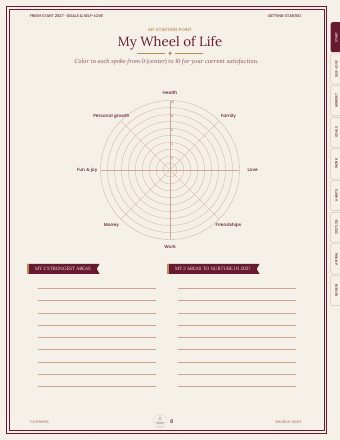
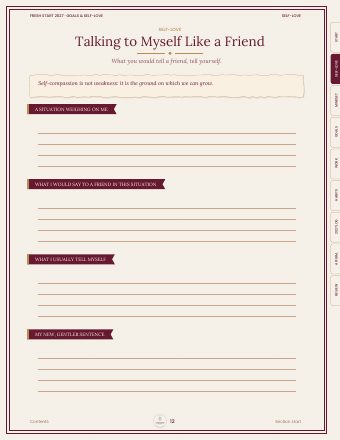
Decluttering is often the first step toward a bigger change: making room in your home, and a little room in your head too. If you'd like to make it one of your goals for the new year, alongside the other projects that matter to you, our Fresh Start 2027 journal helps you look back on your year, choose your priorities and break them into small, realistic steps.
Frequently asked questions
Which room should I declutter first?
Start with a small space you see every day, like the kitchen counter, the entryway or your nightstand. A quick, visible result gives you the energy to keep going.
How long does it take to declutter a house?
It depends on the size of your home and how much time you have. Working 15 minutes a day, one area at a time, many people see a real difference within a few weeks. Steady progress matters more than speed.
How do I decide what to keep?
Ask yourself whether you use the item or truly love it. If the answer is no to both, it can probably go. For items you're unsure about, a dated "maybe" box helps you decide later.
What should I do with things I'm donating?
Put them in a bag that goes straight into your car, then drop them off at a local charity, thrift store or community swap group. Broken items go to recycling or your local waste drop-off center.
Sources
- Stanford BeWell: A clean, well-lighted place, how less clutter can reduce stress
- Cleveland Clinic Newsroom: Declutter Your Home, Destress Your Mind
- Utah State University: Ask an Expert, The Mental Health Benefits of Decluttering
This article is written with the help of artificial intelligence and reviewed by the Lantern Days team. It does not replace advice from a professional. See our Artificial intelligence page.

Subscribe and get 2 gifts


