
Losing a Parent as an Adult: Coping With the Death of Your Mom or Dad
Losing your mom or dad is life-changing, even as an adult. What makes this grief unique, common feelings, family and paperwork, and gentle ways to move forward.
Published on November 11, 2026 · 5 min read

Losing your mom or dad is one of the most shaking losses in life, even as an adult and even when you saw it coming. This grief touches your past (your childhood memories), your present (family, paperwork, shifting roles) and your future (all the moments you won't get to share). It's normal to feel lost, angry, exhausted or strangely empty. There's no right way to grieve a parent, but there are things that can make the road a little gentler.
Why losing a parent hurts so much, even as an adult
People sometimes say, "It's the natural order of things." That may be true, but it doesn't make the pain any smaller. Your parent was often the one person who had known you since your very first day. With them goes part of your story.
It's also an extremely common loss. Citing U.S. Census Bureau data, the American Psychological Association reports that about 44% of Americans have lost at least one parent by age 49, and nearly 76% by age 59. Even so, this grief often goes unrecognized: after the funeral, people expect you to slip quickly back into adult life.
What makes this grief different
You lose an anchor
Even if you've been independent for years, your parent may still have been the person you called for a recipe, some advice or good news. Small everyday moments can suddenly bring their absence into focus.
Your role changes
A parent's death often brings new responsibilities: supporting the surviving parent, handling the estate, making financial decisions, becoming the "elder" of the family. The APA notes that adults often have to take on tasks they once relied on their parents for.
Losing your second parent
When the second parent dies, many people suddenly feel like an "adult orphan," even at 50 or 60. This loss can be especially symbolic: you become the oldest generation, and you may think more about your own life and what you want to pass on.
Big life milestones
A wedding, a birth or a move can stir up grief years later, because your parent isn't there to share it. Becoming a parent yourself, in particular, can bring a very strong sense of missing them.
Common feelings after losing a parent
All of these are normal, and they can show up all at once:
- deep sadness, often in waves;
- anger: at the illness, the doctors, life, or even your parent;
- guilt: "I should have called more," "I should have seen the signs";
- relief, especially after a long illness, sometimes followed by guilt for feeling it;
- fear about your own mortality;
- exhaustion, both physical and mental.
When the relationship was complicated
If your relationship with your parent was difficult, distant or full of conflict, your grief can be even more complex. You may be mourning both the person they were and the relationship you never got to have. The APA notes that estrangement or unresolved conflict can add guilt, regret and lingering "what ifs." Those feelings belong here too.
Family, paperwork and decisions
The weeks after a parent dies are often full of tasks: the funeral, the estate, a house to empty, accounts to close. A few tips:
- don't do everything at once: only a few steps are truly urgent; the rest can wait;
- share the tasks among siblings or relatives, based on each person's strengths;
- don't rush through their belongings: you don't have to clear the house in a weekend unless you must;
- keep a few meaningful things: a scarf, a mug, letters, handwritten recipes.
Family tension is common after a parent dies: everyone grieves differently, and decisions can reopen old wounds. Take breaks, and remember that grief leaves everyone more fragile.
Staying connected to your parent
You don't have to "let go" of your parent in order to move forward. Many people find comfort in keeping the bond alive:
- telling their stories to your kids or loved ones;
- cooking their recipes;
- keeping their photos close;
- carrying on one of their habits or a value they taught you;
- writing them a letter on their birthday, or whenever you need to talk to them.
Photos, in particular, often become precious. Instead of leaving them in a shoebox or on a phone, you can put together an album to look through and share with your family.
Taking care of yourself through this grief
- Acknowledge your pain, even if others think you should be "over it" by now.
- Take time off if you can, or lighten your schedule for a few weeks.
- Keep a small routine: eat, move a little, sleep.
- Talk about your parent with people who knew them.
- Write what you feel, what you wish you could tell them, the memories that come back.
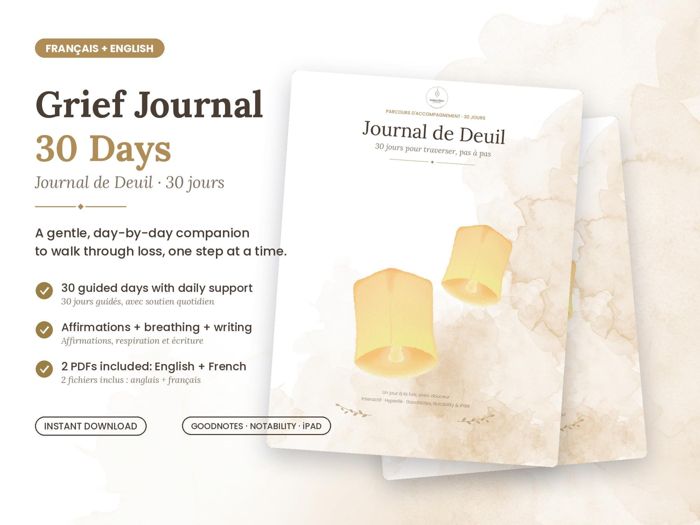
A guided grief journal can help you put all of this into words at your own pace, with gentle questions for the days you don't know where to start. The Grief Journal helps you understand what you're going through and hold on to the memories of your parent.
When to reach out for help
If grief keeps you from functioning for a long time, if you're withdrawing from everyone, if you can't sleep or eat, or if you're having thoughts of harming yourself, talk to your doctor, a therapist or a grief support organization.
Frequently asked questions
Is it normal to be this devastated when an elderly parent dies?
Yes. Your parent's age doesn't necessarily make the grief smaller. Even when the death was expected, losing the person who raised you is an enormous loss.
How long does grief last after losing a mother or father?
There's no set timeline. The first year, with all its "firsts," is often the hardest, and waves of sadness can return around important dates for years.
What should I do with their belongings?
There's no rush unless you have no choice. Keep what matters to you, ask family members what they'd like to keep, and donate the rest when you feel ready.
How can I support my surviving parent?
Be present, offer specific help (meals, paperwork, errands), and accept that you may grieve differently. Take care of your own grief too: you can't carry everything alone.
Sources
- American Psychological Association: Grieving the midlife loss of a parent
- The Conversation: Why losing a parent when you're a young adult is so hard
- Canadian Psychological Association: "Psychology Works" Fact Sheet: Grief in Adults
This article is written with the help of artificial intelligence and reviewed by the Lantern Days team. It does not replace advice from a professional. See our Artificial intelligence page.
To go further





Subscribe and get 2 gifts


